Water running toward your house every time it rains points to a drainage problem with your paving, gradients, or soil. Plex Group explains the causes and the permanent fixes across Worcestershire and Gloucestershire.
Get in touch with us today!
Leave your details and we'll arrange a time that fits your schedule!
Prefer to talk? Call or text us.
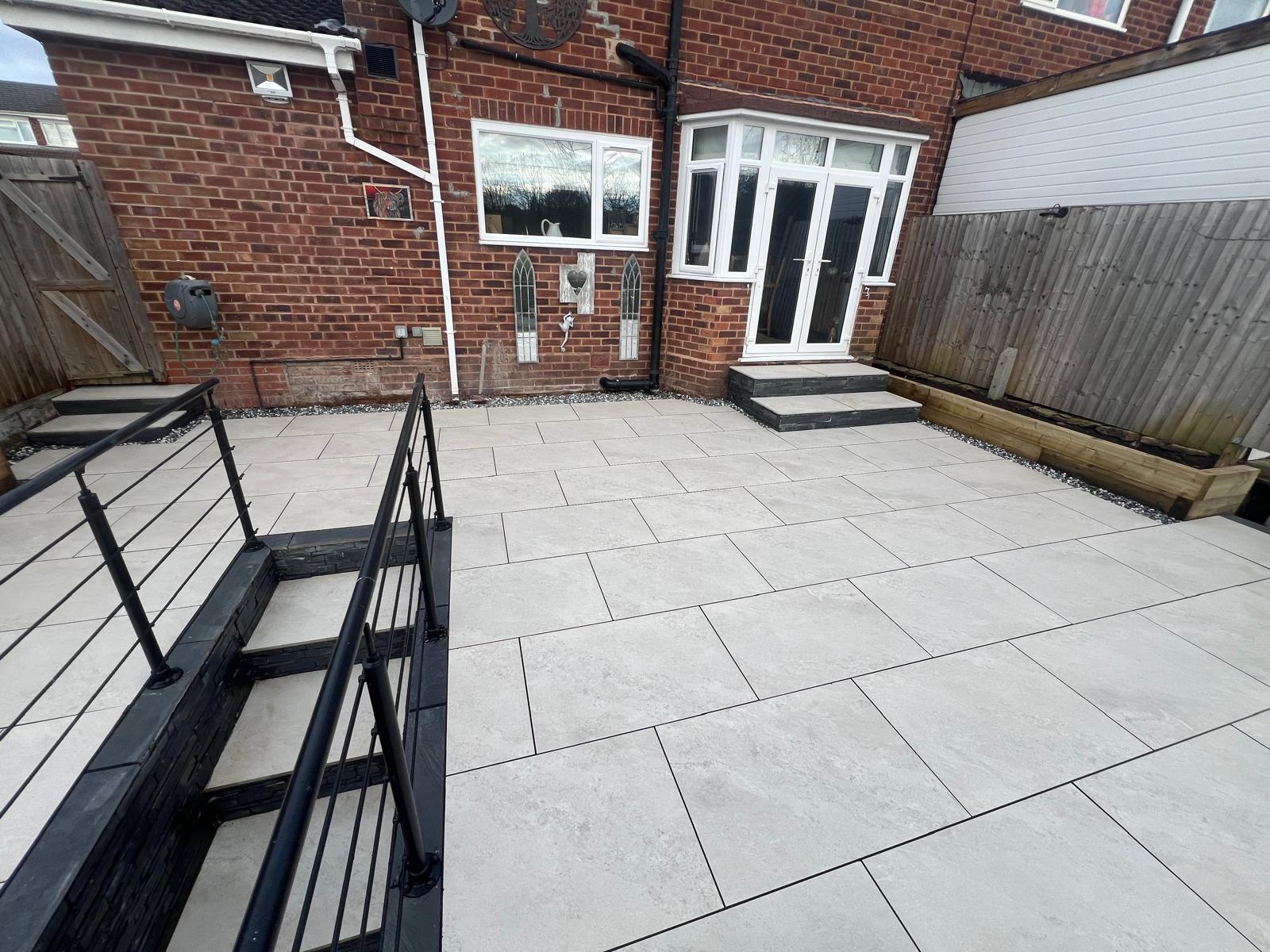
Every hard surface around your property — patio, path, driveway — must be laid with a fall that directs water away from the building. The minimum is 1:60, which is a drop of roughly 17mm for every metre of surface. When patios or paths are laid level, or when slabs have sunk over time creating a reverse fall, water has no option but to run toward the house. In clay-heavy areas like Evesham and Cheltenham, this happens quickly as slabs shift with seasonal ground movement.
A common problem in older properties is that patios, driveways, or raised borders have been built up over the years to a level above the damp-proof course. Once this happens, rainwater can bridge the DPC and enter the wall. Even a few centimetres of built-up paving can cause persistent damp on internal walls that's difficult to trace to its source.
Clay soil across Worcestershire and Gloucestershire is effectively impermeable during heavy rain. Once it's saturated, water has nowhere to go except across the surface. If your garden falls toward the house, or if neighbouring land sits higher than your property, this overland flow can be substantial. French drains, soakaways, and re-graded surfaces redirect this water before it reaches the building.
ACO channel drains at the base of the house wall are specifically designed to intercept water before it reaches the building. If these channels are blocked with debris, or if they were never installed in the first place, water will run directly to the wall. Clearing and rodding ACO channels is simple maintenance — but installing them where none exist requires excavation and a proper drainage outlet.
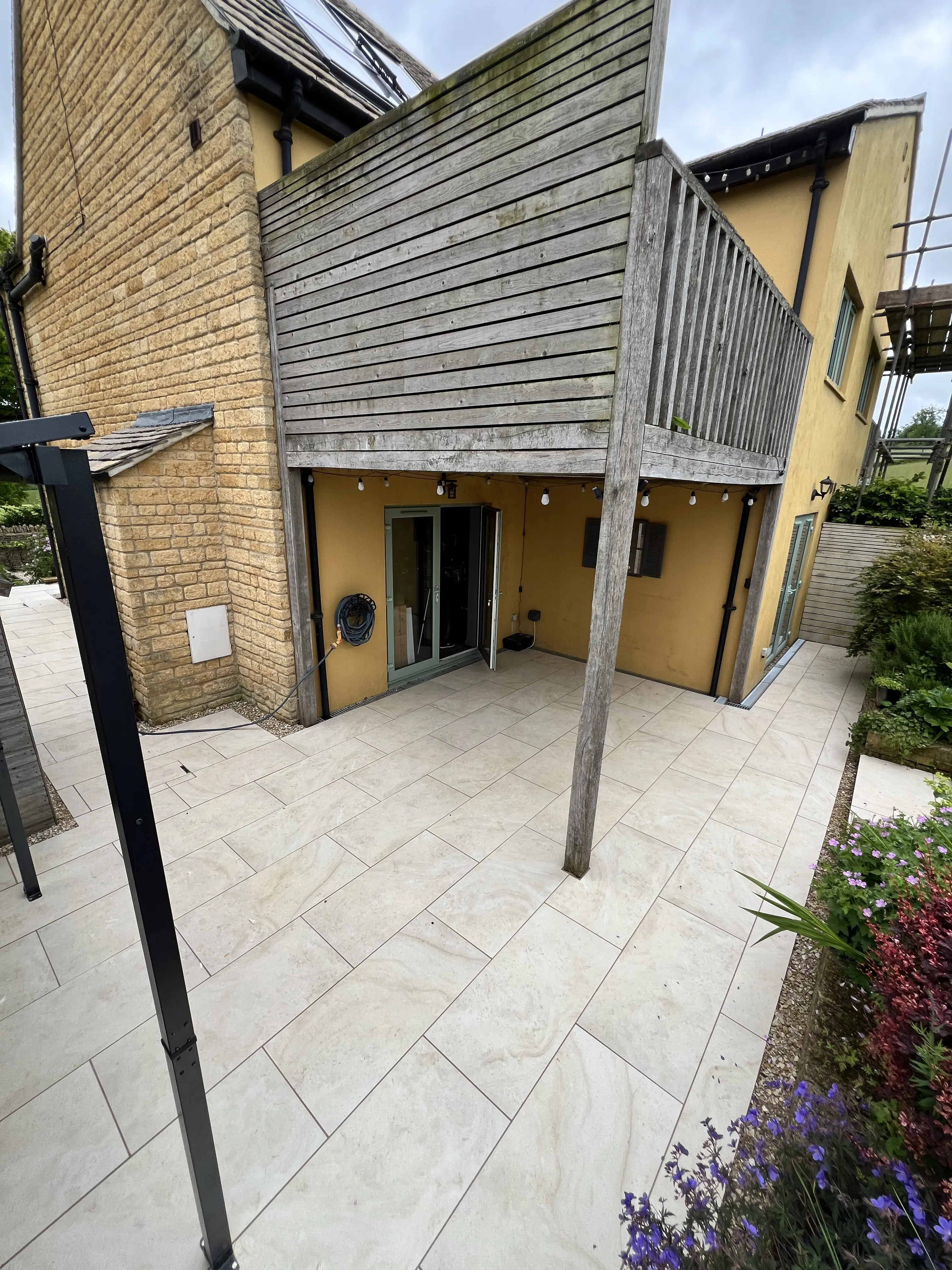

We carry out full site assessments to understand how water moves across your property. Depending on what we find, we re-grade patios and paths, install ACO channel drains or French drains, build or clear soakaways, and address any hard surfaces that are directing water toward the building. We work across Worcestershire, Gloucestershire, Oxfordshire, and Warwickshire — and we understand the specific drainage challenges that come with clay-heavy ground across Evesham, Cheltenham, and the Cotswolds.
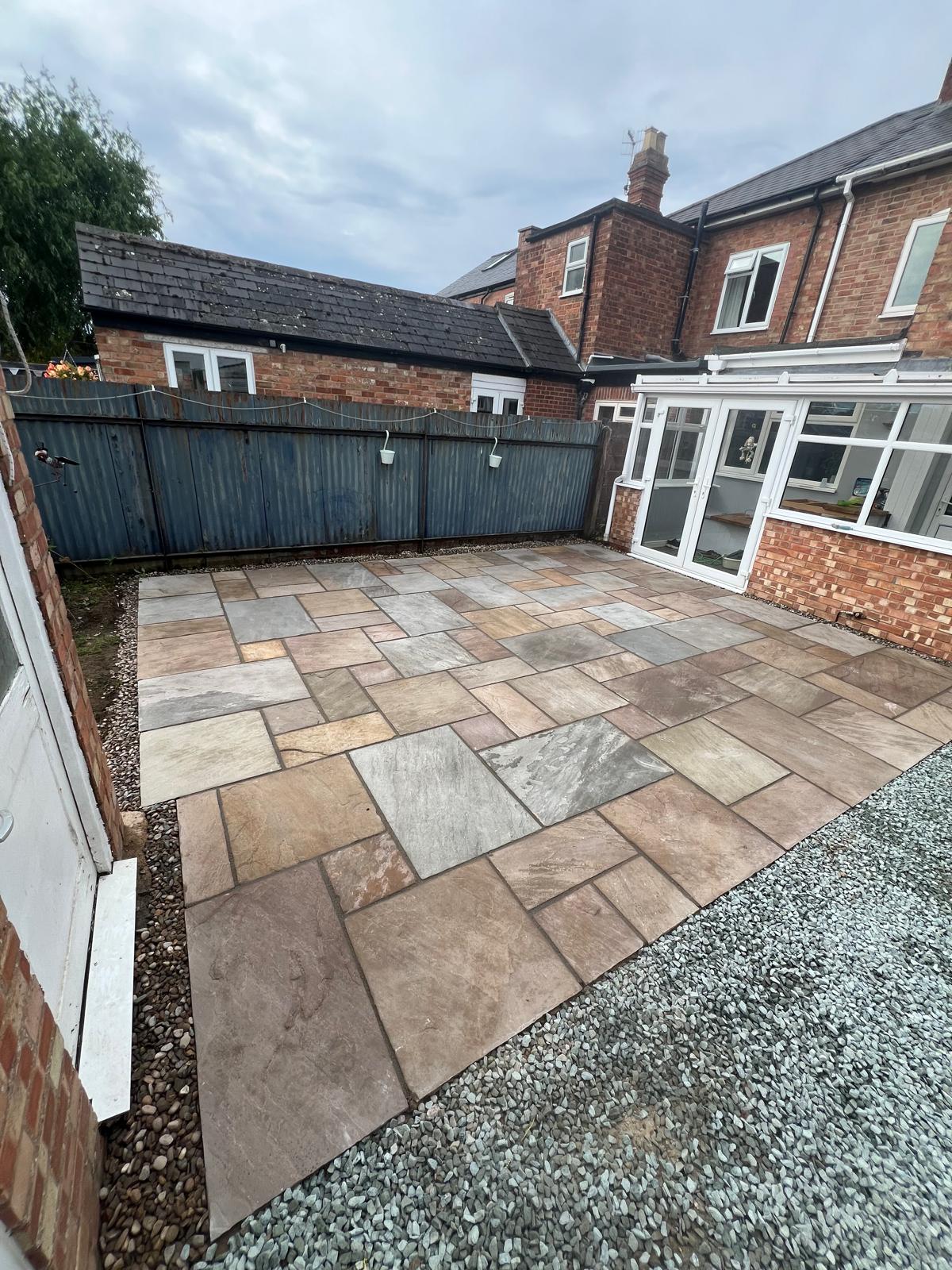
Water running toward your house isn't something to wait on. Plex Group identifies the source and installs permanent drainage solutions across Worcestershire, Gloucestershire, Oxfordshire, and Warwickshire.
★★★★★
From the initial meeting to the final clear up Patrick and Luke were unfailingly polite and professional. Patrick’s quotation for the work was sensible with a detailed breakdown. The work was started on time and was kept to time. The resulting terracing exceeded expectations and the work area was left cleaner than when the team arrived. I cannot thank Patrick, Luke and Jake enough for all their work and would have no hesitation in recommending PLEX Group.

★★★★★
It has been a pleasure having Plex work with me on my garden project. Totally engaged, very communicative and prompt. Access to my property is difficult but they just worked around any problems with a refreshing 'can do' attitude. I would happily recommend Plex to anyone working on a garden project.
★★★★★
Fantastic work and would highly recommend. The team were professional, friendly, considerate, hard working and flexible to ensure the works met our needs and expectations. Really nice team to have on site and were respectful and kept it as tidy as they could. Very impressed with the work and looking to get them to come back to do a couple of other jobs for us in the future.
★★★★★
I am really happy with the work that Plex did. They came up with solutions to problems that arose quickly, efficiently and without any stress. They were friendly, professional, organised, efficient and had excellent communication.
★★★★★
We have recently had a new garage installed from the Plex team and we are thrilled with the finished product. Can't thank Patrick Luke and their team enough. Would highly recommend.
★★★★★
I would highly recommend Luke and Patrick and their team. They are all extremely polite and hard-working. They put up a new pergola in our back garden and tidied up the edges of the garden. An excellent job.
★★★★★
Patrick, Luke and their team have transformed our sloped garden giving us a lovley functional space. They removed a hedge sadly over run with brambles with a fence gaining us a couple more meters of garden too! Despite having a week of rain they did their best to clear up at the end of the job. We would highly recommend this professional team.
★★★★★
Luke and Patrick have completed two projects for us now. They are the most polite and professional people with a hardworking team of individuals. Nothing is too much trouble for them.
★★★★★
Luke and his team are really lovely and professional. Cannot recommend him enough.
★★★★★
Luke and the team are absolutely brilliant. A passion for what they do and personal but professional, so pleased to have found them!
★★★★★
Really pleased with the concrete base for my carport that was completed by the team , worked really hard in poor weather conditions . Great job would definitely recommend the team .
★★★★★
Our garden has never looked better - hard-working, thorough, and also great at getting in touch if there's a change to the schedule, etc. They have nursed our box hedging back to health. Before and and after photos are a bonus!
★★★★★
Competitive price wise even though the work carried out was to a very high standard. I was very pleased with the end result and impressed with the tidiness they left the garden after all the work was carried out. A very happy customer!
★★★★★
Very obliging and efficient we have worked out a schedule that suits us both.