
Bouncy decking means the subframe below the boards is underbuilt, failing or rotten. Plex Group explains the causes and what a proper repair looks like across Worcestershire and the Cotswolds.
See how we can help you!
.webp)
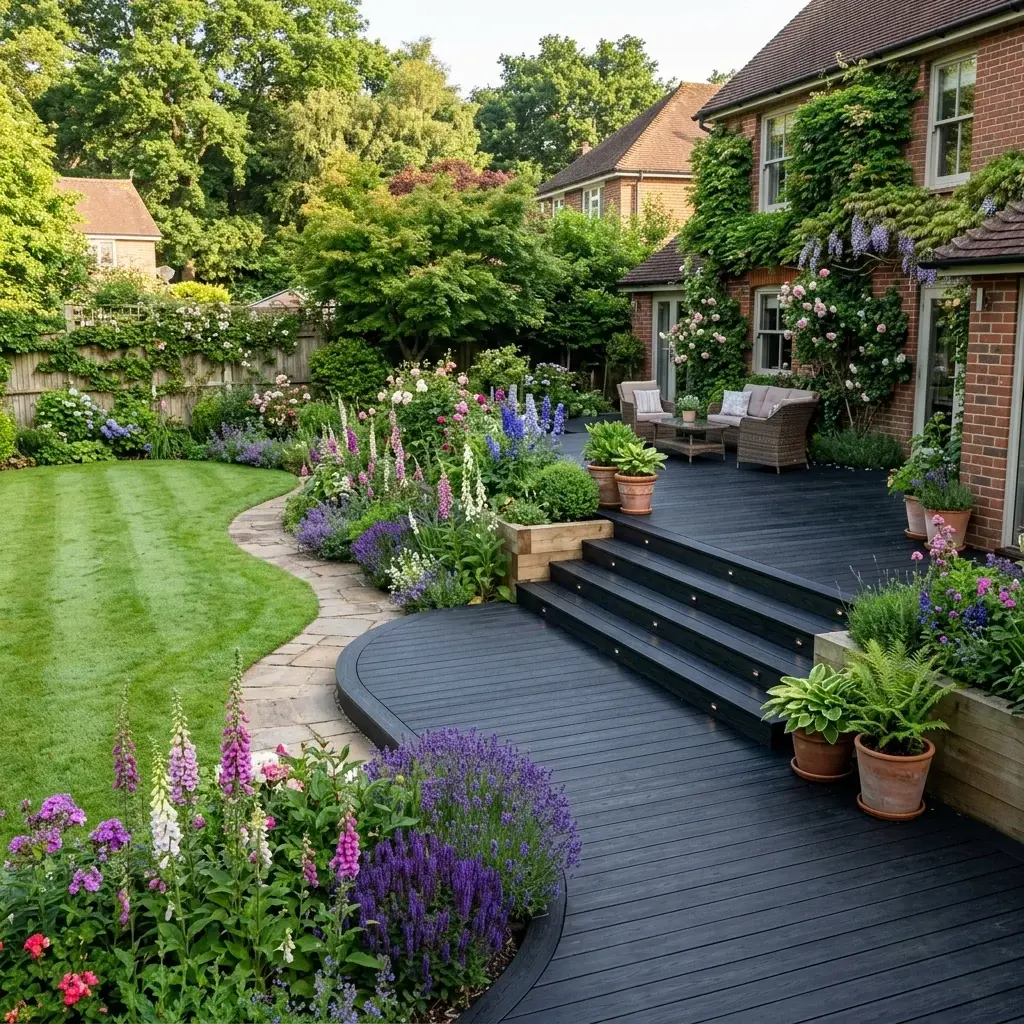
Standard softwood decking boards need joists at 400mm centres at most, and 300mm centres where boards run diagonally or where composite boards are used. Many decks are built with joists at 600mm centres, the spacing the builder had in their head from stud walls. The boards then span further than they were designed to and deflect underfoot. Undersized joist timber causes the same problem over longer spans. The fix is not more screws through the boards. The fix is more support underneath them.
The whole deck sits on its posts, and the posts are the part you cannot see. Posts concreted in without ground contact rated timber rot at the point where they leave the soil, usually within eight to twelve years. Posts sat on paving slabs or bare soil sink unevenly, and spiked repair supports driven in beside a failing post rarely hold because they never reach undisturbed ground. When one post drops even ten millimetres, the beam above it hangs unsupported and the whole corner of the deck bounces. If the movement is worse in one area than another, failed support below ground is the most likely cause.
Joists need bridging, known as noggins, fixed between them to stop them twisting and to share load across the frame. A frame without noggins works as a set of individual planks rather than a single structure, so every footstep loads one joist at a time. The same applies to the main bearers. Where a single beam has been stretched between posts set too far apart, the beam itself flexes and the deck moves as one surface.
Ground conditions across our area work against deck frames in different ways. In the Vale of Evesham and on the clay soils around Cheltenham, the ground swells in winter and shrinks in summer, which rocks concrete pads and loosens post fixings year after year. On the limestone brash of the Cotswold wolds the soil drains freely but is often shallow, so pads bear at inconsistent depths and settle unevenly. In older gardens around Broadway and Winchcombe, established tree roots lift and tilt pads long after the deck was built. Add a frame built tight to the ground with no airflow beneath it and the joists stay damp, soften and lose their stiffness long before the boards on top show any sign of trouble.
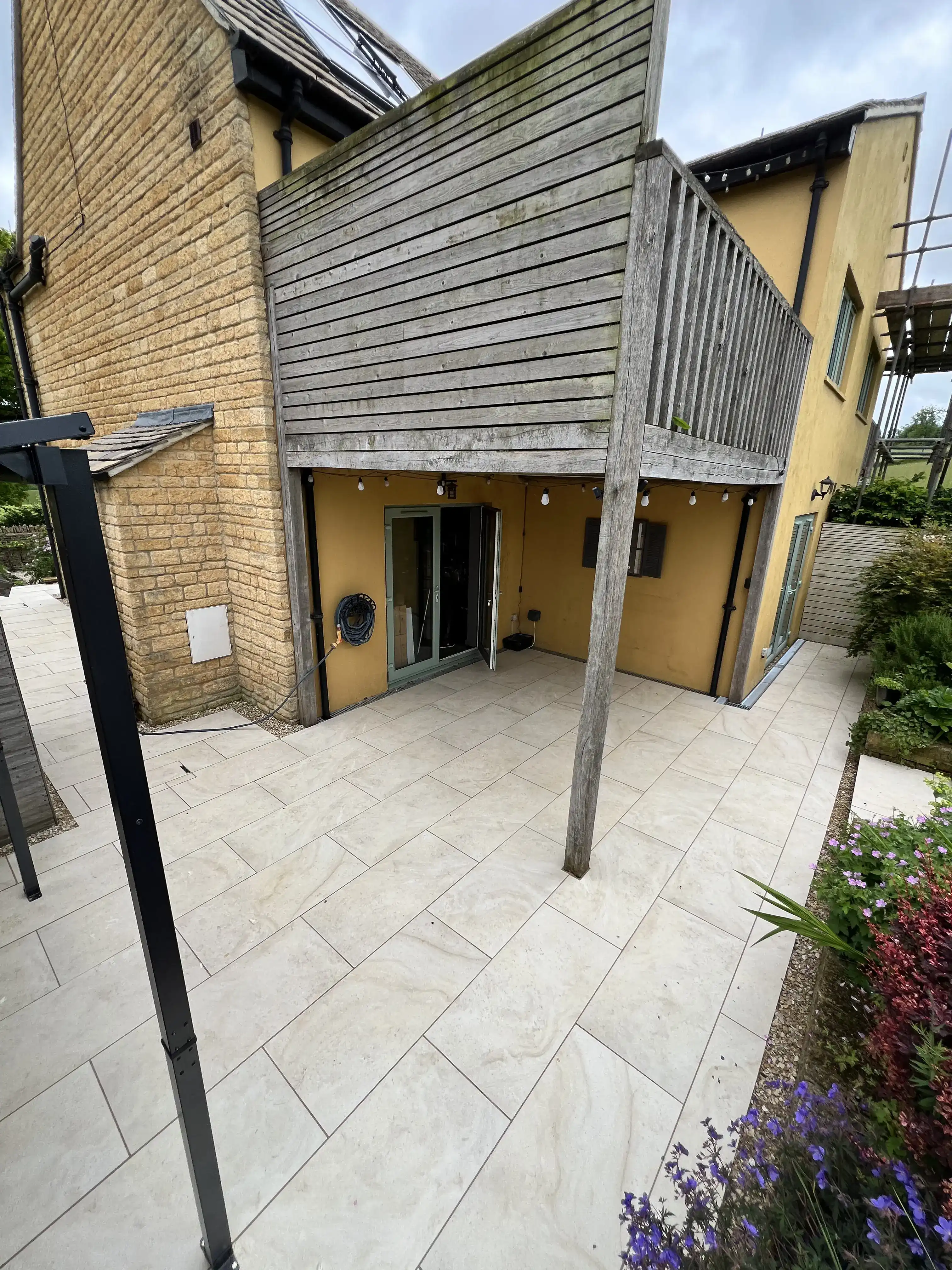
A 10-day full-property hardscape overhaul in Guiting Power, featuring French Dolomite Limestone porcelain throughout, a bespoke pergola over an outdoor kitchenette, and full perimeter drainage.

.webp)
A 6-day boundary extension and fence installation in Kingham, built using tongue and groove cladding to create a seamless, architectural finish.
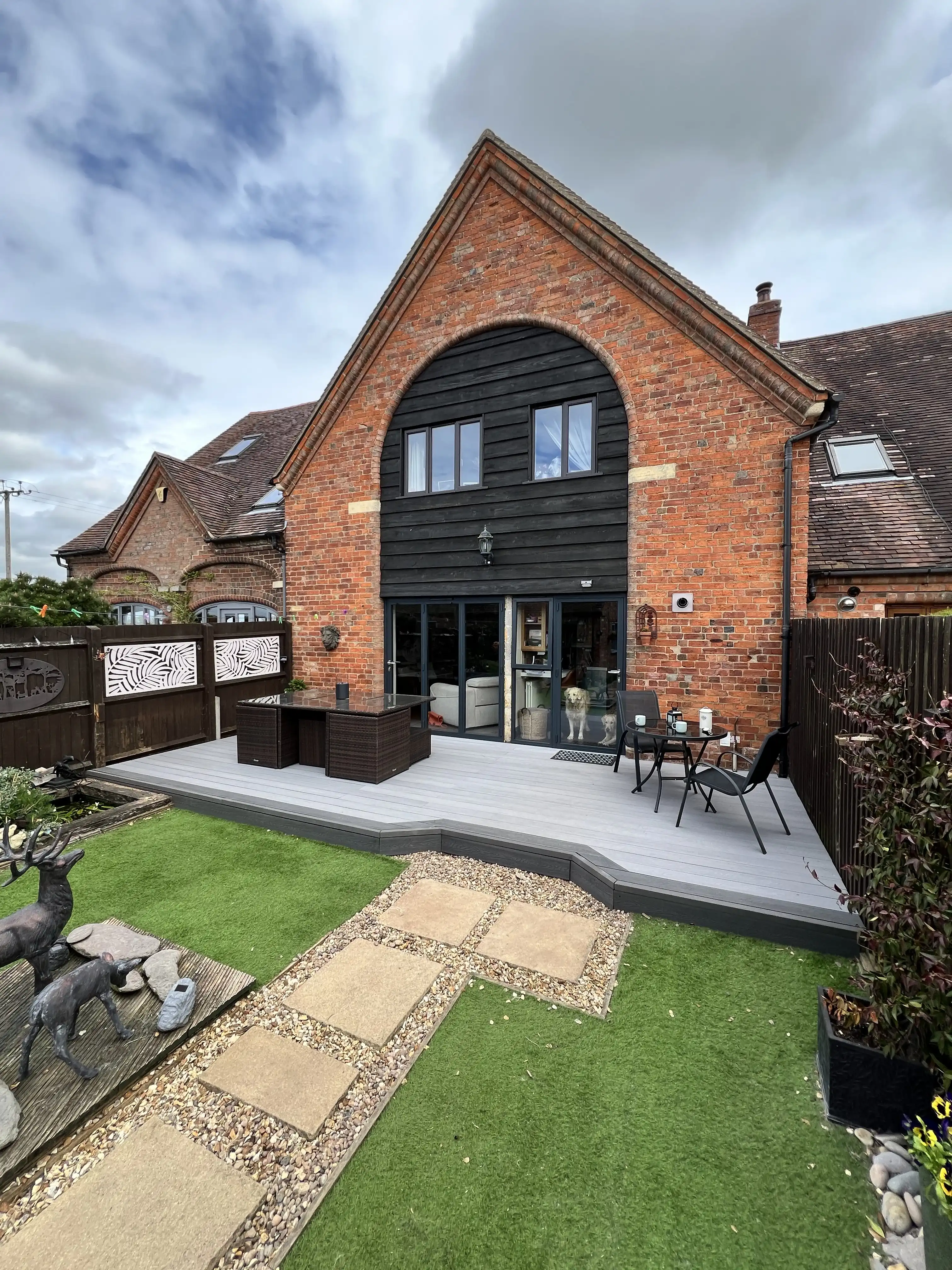
A 20 year old timber deck replaced with frosted blue composite boarding, a custom step, and a built-in fish pond access hatch
.webp)
.webp)
We start with a full site assessment. That means lifting boards to inspect the joists, checking joist centres and spans against the board type, probing posts at ground level for rot and checking pads and footings for settlement. Where the frame is sound but underbuilt, we add joists to close the centres to 400mm, fit noggins throughout and sister weak joists with new C24 timber. Where posts have failed, we excavate and set new ground contact rated posts in concrete to a proper depth, never spiked repair supports. Where rot has taken hold, we rebuild the subframe on a ventilated design with a membrane over the joists before the boards go back down. Plex Group repairs and rebuilds decking across Worcestershire, Gloucestershire, Oxfordshire, and Warwickshire.
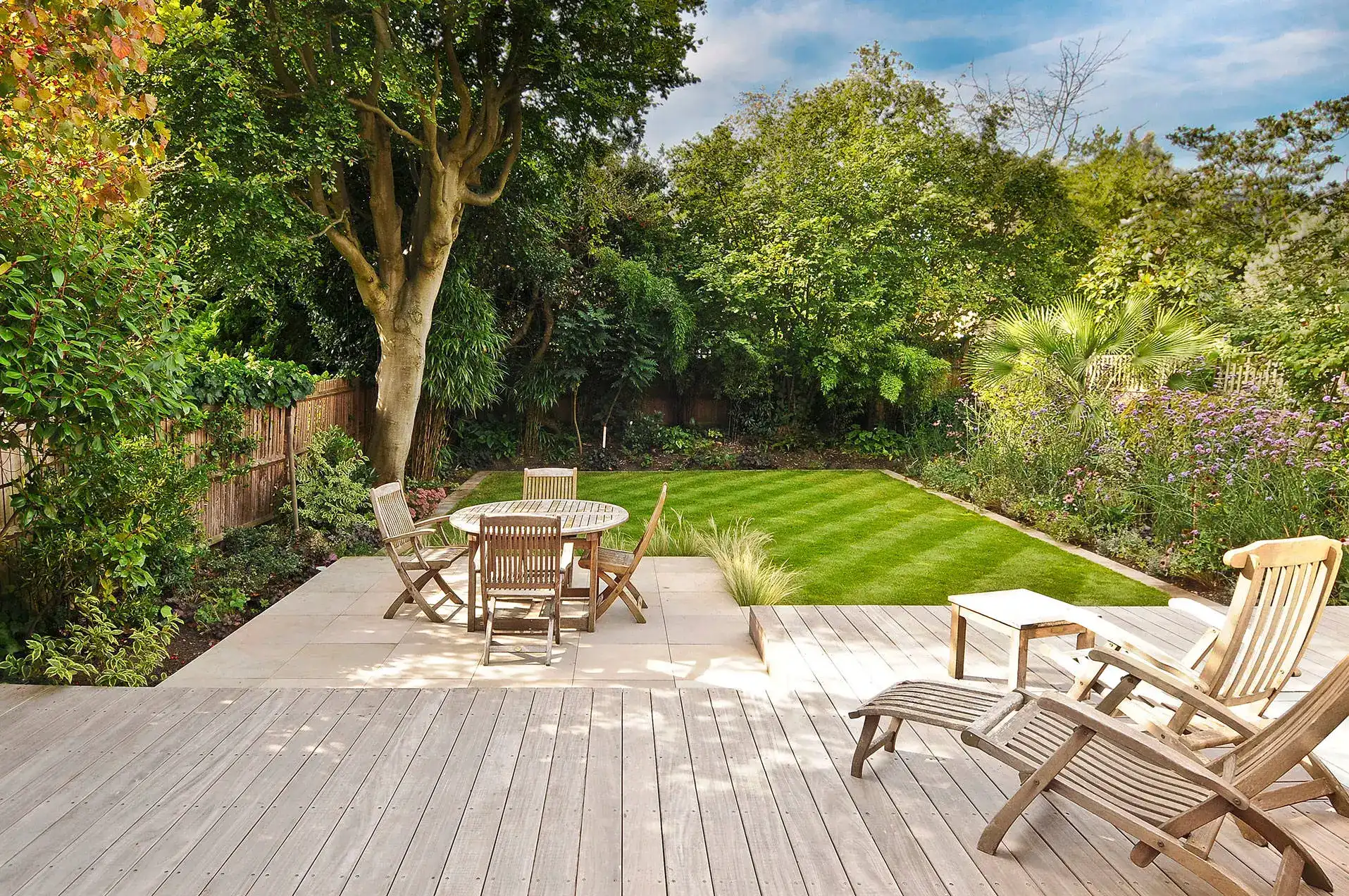
A bouncy deck is always fixable once the cause is identified. Plex Group assesses and repairs decking across Worcestershire, Gloucestershire, and the Cotswolds. Get in touch to arrange a site assessment.
.webp)
Ivy roots into the core of a drystone wall and forces the stones apart, and pulling it off makes the damage worse. Plex Group explains what is happening and the right way to fix it across the Cotswolds.
.webp)
A bulging drystone wall means the core has failed and the faces are separating. Plex Group explains why it happens and how a proper rebuild works across the Cotswolds and Gloucestershire.

Potholes in a gravel driveway mean the gravel is sitting on soil with no proper sub-base or membrane beneath it. Plex Group explains the causes and the permanent fix across Worcestershire and the Cotswolds.
.webp)
From the initial meeting to the final clear up Patrick and Luke were unfailingly polite and professional. Patrick’s quotation for the work was sensible with a detailed breakdown. The work was started on time and was kept to time. The resulting terracing exceeded expectations and the work area was left cleaner than when the team arrived. I cannot thank Patrick, Luke and Jake enough for all their work and would have no hesitation in recommending PLEX Group.

It has been a pleasure having Plex work with me on my garden project. Totally engaged, very communicative and prompt. Access to my property is difficult but they just worked around any problems with a refreshing 'can do' attitude. I would happily recommend Plex to anyone working on a garden project.
Fantastic work and would highly recommend. The team were professional, friendly, considerate, hard working and flexible to ensure the works met our needs and expectations. Really nice team to have on site and were respectful and kept it as tidy as they could. Very impressed with the work and looking to get them to come back to do a couple of other jobs for us in the future.
I am really happy with the work that Plex did. They came up with solutions to problems that arose quickly, efficiently and without any stress. They were friendly, professional, organised, efficient and had excellent communication.
We have recently had a new garage installed from the Plex team and we are thrilled with the finished product. Can't thank Patrick Luke and their team enough. Would highly recommend.
I would highly recommend Luke and Patrick and their team. They are all extremely polite and hard-working. They put up a new pergola in our back garden and tidied up the edges of the garden. An excellent job.
Patrick, Luke and their team have transformed our sloped garden giving us a lovley functional space. They removed a hedge sadly over run with brambles with a fence gaining us a couple more meters of garden too! Despite having a week of rain they did their best to clear up at the end of the job. We would highly recommend this professional team.
Luke and Patrick have completed two projects for us now. They are the most polite and professional people with a hardworking team of individuals. Nothing is too much trouble for them.
Luke and his team are really lovely and professional. Cannot recommend him enough.
Luke and the team are absolutely brilliant. A passion for what they do and personal but professional, so pleased to have found them!
Really pleased with the concrete base for my carport that was completed by the team , worked really hard in poor weather conditions . Great job would definitely recommend the team .
Our garden has never looked better - hard-working, thorough, and also great at getting in touch if there's a change to the schedule, etc. They have nursed our box hedging back to health. Before and and after photos are a bonus!
Competitive price wise even though the work carried out was to a very high standard. I was very pleased with the end result and impressed with the tidiness they left the garden after all the work was carried out. A very happy customer!
Very obliging and efficient we have worked out a schedule that suits us both.

.webp)


