
Patio slabs that rock, shift, or lift after installation are a sign of something deeper going wrong. Plex Group explains the real causes and how to fix them permanently across Worcestershire, Gloucestershire, and Warwickshire.
See how we can help you!


The most common cause is a poorly prepared or incorrectly specified sub-base. If the hardcore layer beneath your slabs hasn't been compacted properly, or if it's too shallow for the ground conditions, it will shift under load and in response to seasonal ground movement. In Worcestershire and Gloucestershire, clay soils expand when wet and contract when dry — putting constant pressure on any paved surface above.
Slabs need to be bedded on a consistent layer of sharp sand or mortar. If the bedding is uneven, too thin, or laid on soft ground, individual slabs will rock and eventually crack. This is particularly common in patios that were laid on a dry bed — a technique that gives poor long-term results in clay-heavy areas.
If your patio has no drainage fall or the drainage channels are blocked, water sits beneath the surface and gradually washes out the bedding material. Once the bedding erodes, slabs lose support and begin to move. In winter, any trapped water freezes, expands, and physically lifts the slabs — a process known as frost heave.
Roots from nearby trees and hedges can push up beneath slabs over time. In older gardens across the Cotswolds and Vale of Evesham, this is a surprisingly common cause of patio movement, particularly where large established trees grow close to the house.
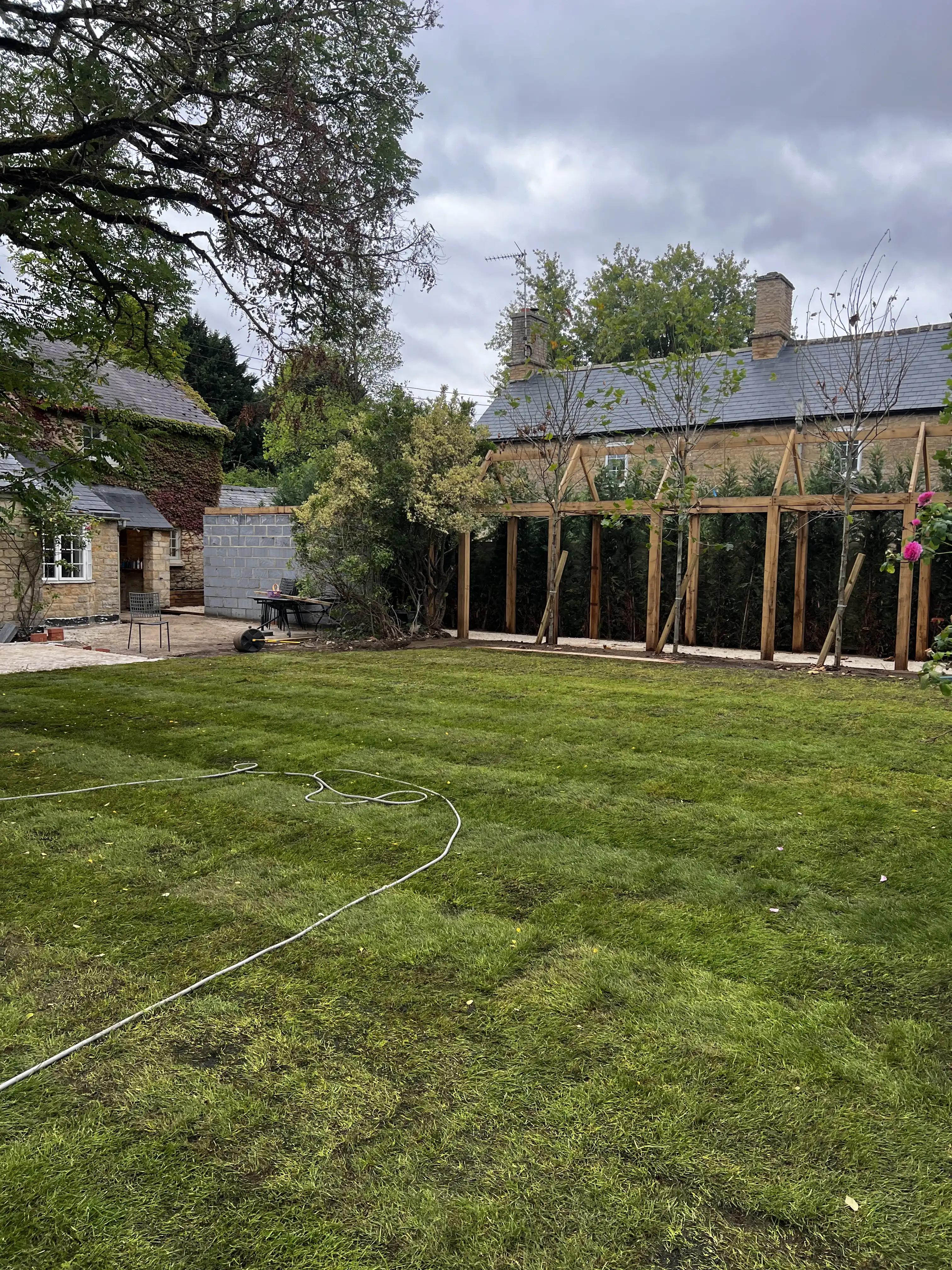
A four-month back garden renovation in Kingham with a 100m² limestone herringbone patio, recycled concrete sub-base, new lawn and London plane tree screening.

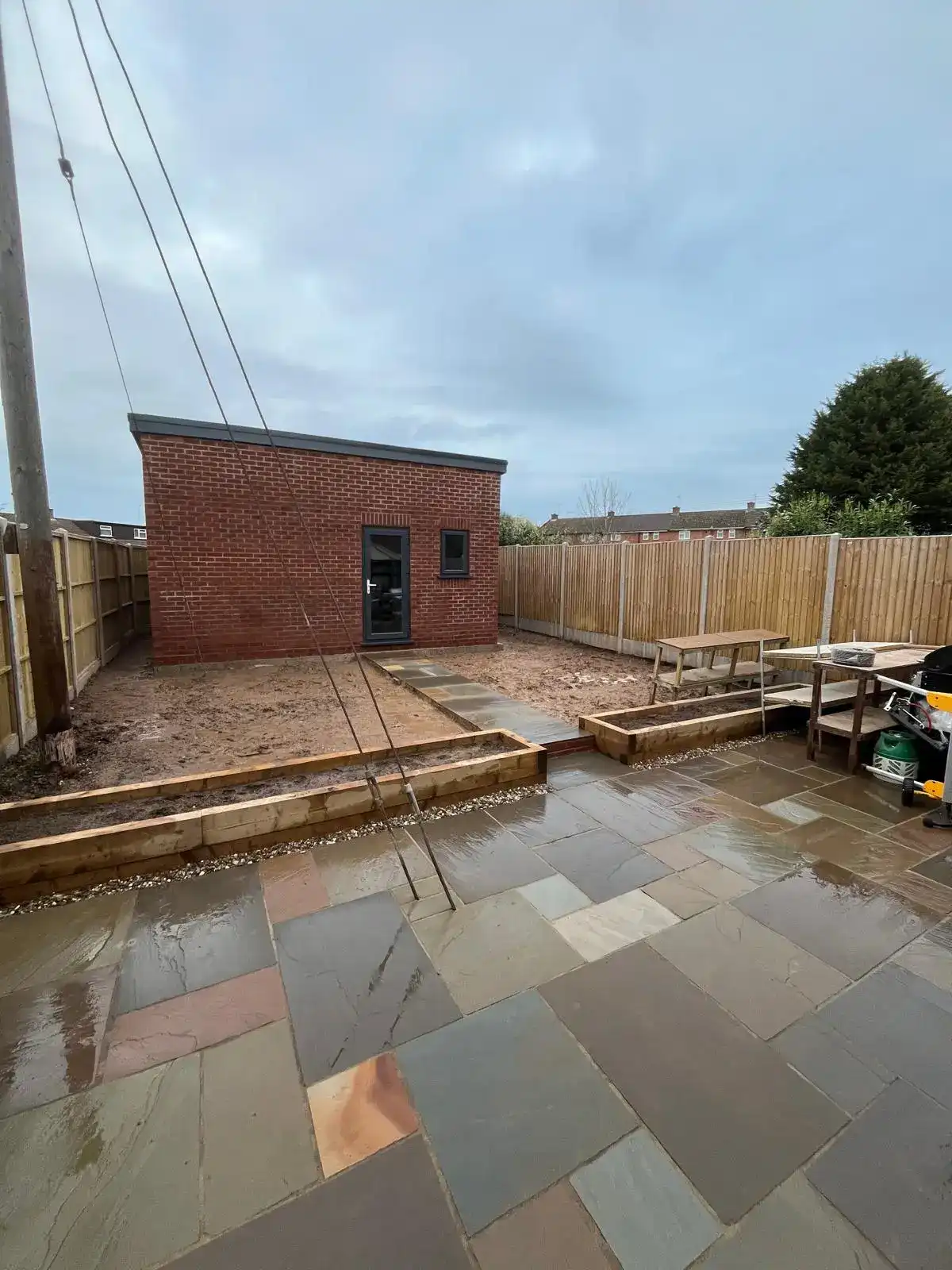
A three-month garden redesign in Bidford-on-Avon with a new soakaway, patios, paths and turf, plus a bespoke 8m x 6m brick-built golf simulator.
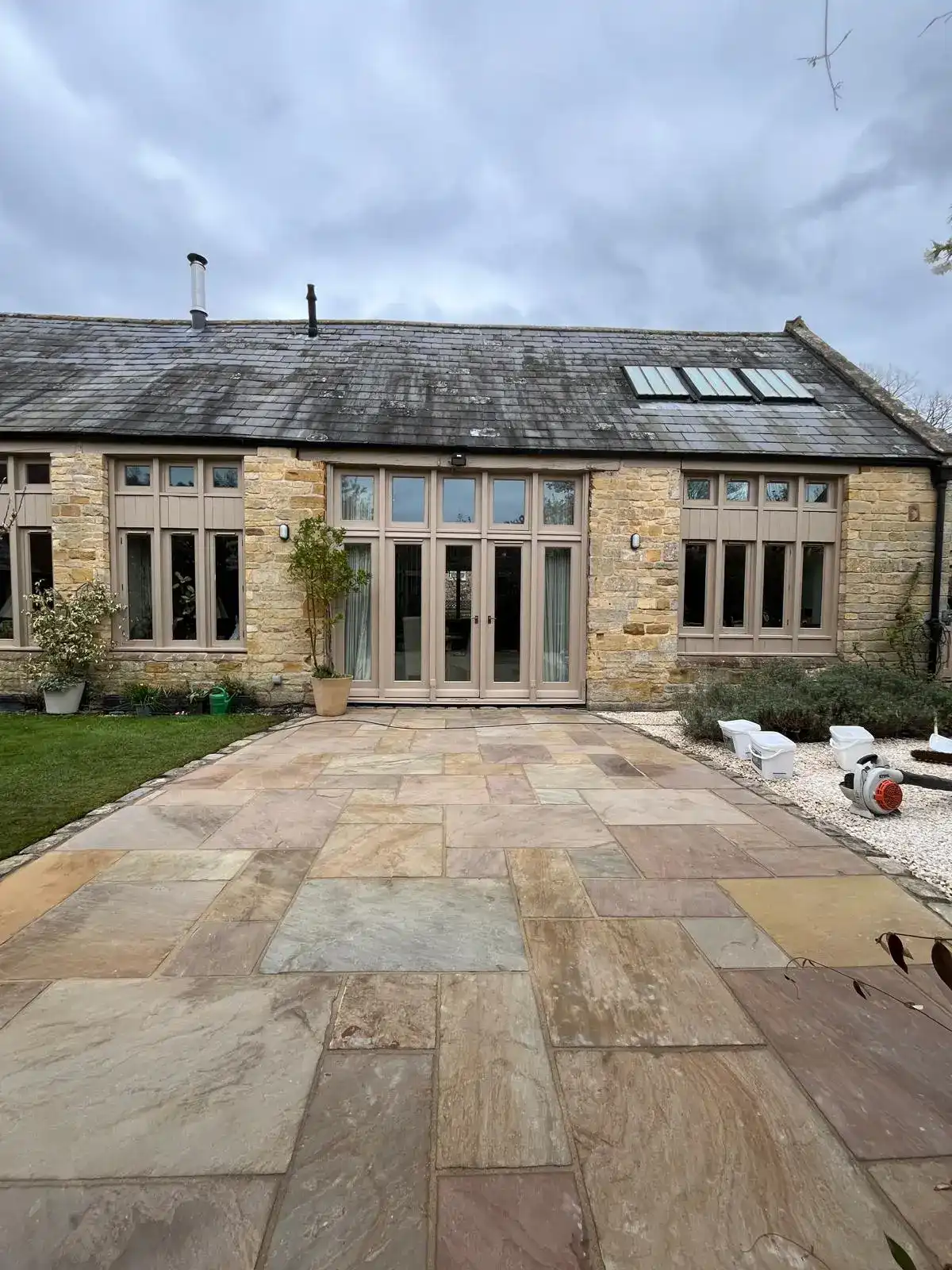
A two-week garden redesign in Moreton-in-Marsh with an Indian sandstone patio, mature yew privacy hedge, relaid lawn and gravel access paths.


We start with a full site assessment to identify whether the problem is the sub-base, bedding layer, drainage, or ground movement. In most cases we lift the affected slabs, excavate to the correct depth, relay a compacted MOT Type 1 sub-base, and re-bed the slabs on a full mortar bed. Drainage channels are installed or cleared where required. The result is a patio that stays put — regardless of the season. Plex Group carries out patio repairs and full relays across Worcestershire, Gloucestershire, Oxfordshire, and Warwickshire.

A patio that keeps moving won't fix itself. Plex Group diagnoses and repairs patio movement across Worcestershire, Gloucestershire, and Warwickshire — getting to the root cause rather than just patching the surface.
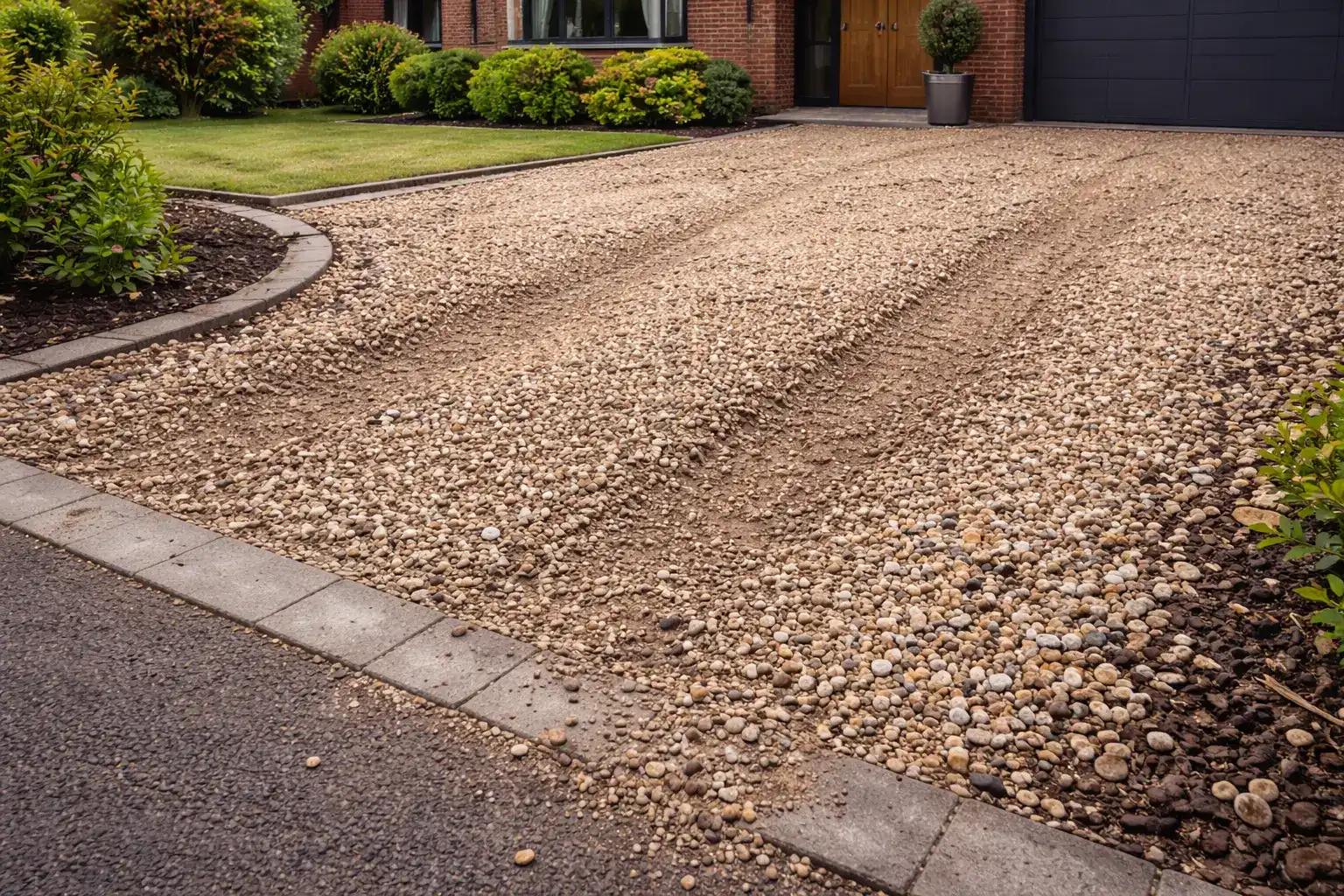
Loose stones on a resin driveway are ravelling, an installation failure rather than wear. Plex Group explains the causes and the repair across Worcestershire and Warwickshire.
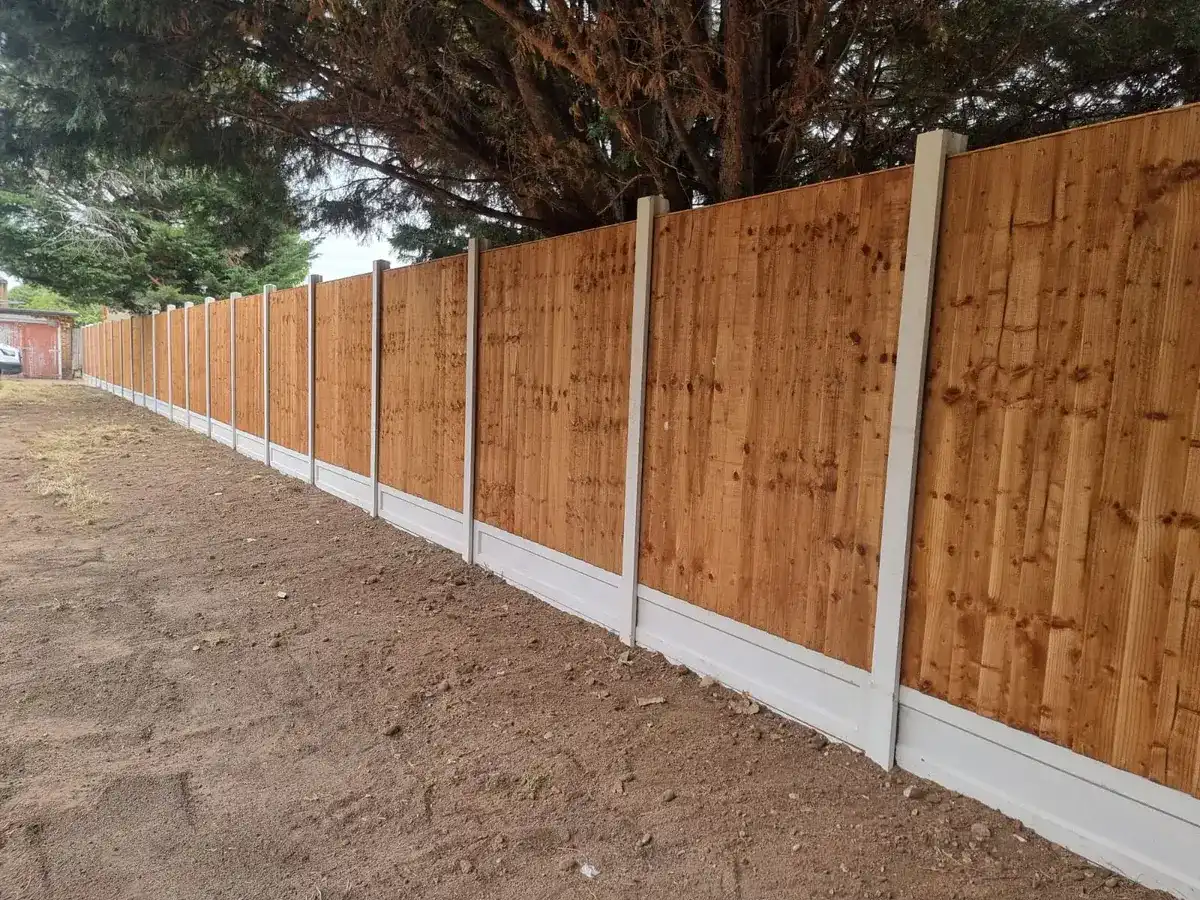
Fence panels blow out because solid panels catch wind, fixings are weak or the posts had already failed. Plex Group explains the causes and the proper fix across Worcestershire and Gloucestershire.
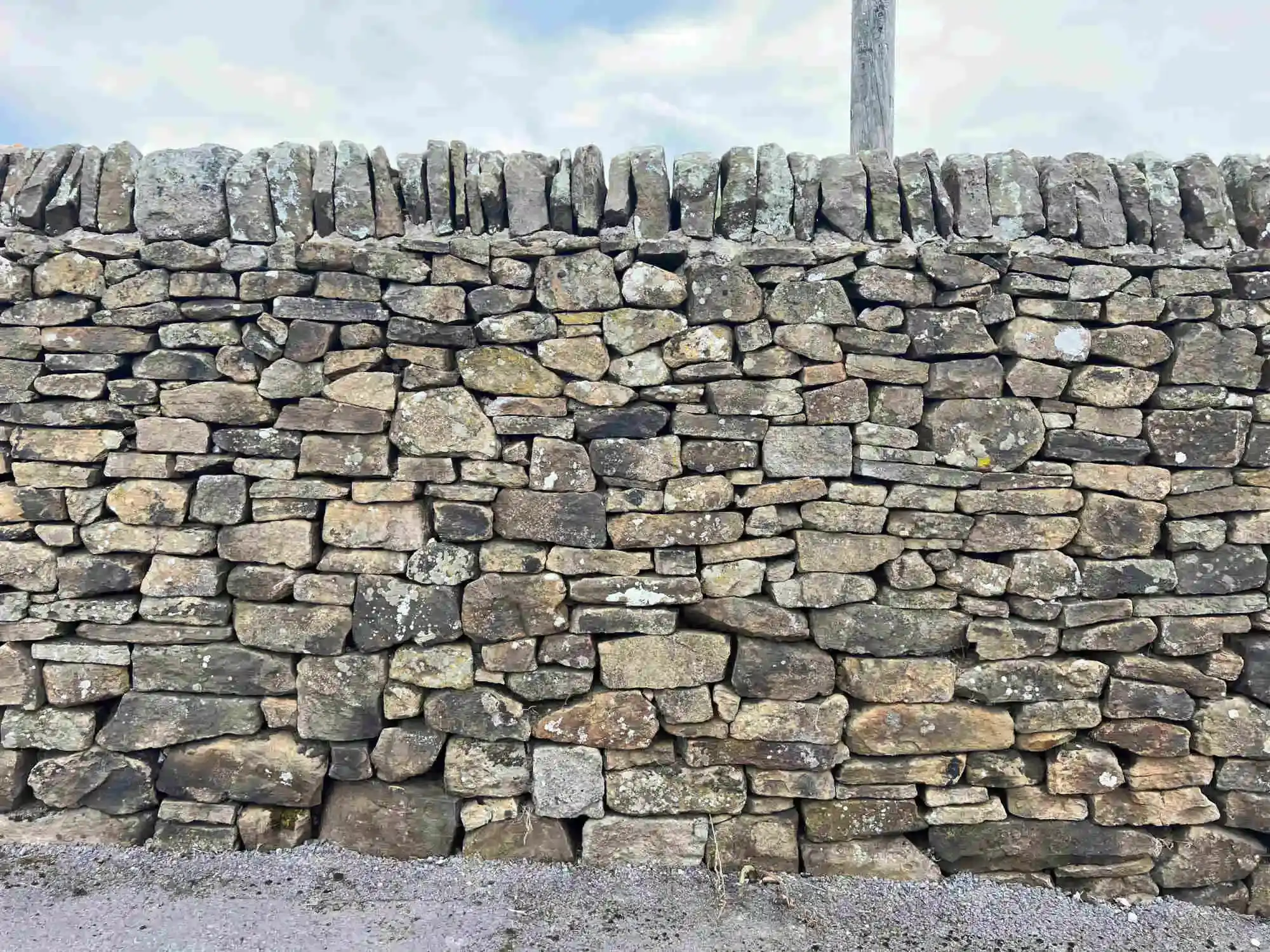
Cement stops a drystone wall moving and draining, traps water in soft limestone and turns small failures into large ones. Plex Group explains the right way to repair walls across the Cotswolds.

From the initial meeting to the final clear up Patrick and Luke were unfailingly polite and professional. Patrick’s quotation for the work was sensible with a detailed breakdown. The work was started on time and was kept to time. The resulting terracing exceeded expectations and the work area was left cleaner than when the team arrived. I cannot thank Patrick, Luke and Jake enough for all their work and would have no hesitation in recommending PLEX Group.

It has been a pleasure having Plex work with me on my garden project. Totally engaged, very communicative and prompt. Access to my property is difficult but they just worked around any problems with a refreshing 'can do' attitude. I would happily recommend Plex to anyone working on a garden project.
Fantastic work and would highly recommend. The team were professional, friendly, considerate, hard working and flexible to ensure the works met our needs and expectations. Really nice team to have on site and were respectful and kept it as tidy as they could. Very impressed with the work and looking to get them to come back to do a couple of other jobs for us in the future.
I am really happy with the work that Plex did. They came up with solutions to problems that arose quickly, efficiently and without any stress. They were friendly, professional, organised, efficient and had excellent communication.
We have recently had a new garage installed from the Plex team and we are thrilled with the finished product. Can't thank Patrick Luke and their team enough. Would highly recommend.
I would highly recommend Luke and Patrick and their team. They are all extremely polite and hard-working. They put up a new pergola in our back garden and tidied up the edges of the garden. An excellent job.
Patrick, Luke and their team have transformed our sloped garden giving us a lovley functional space. They removed a hedge sadly over run with brambles with a fence gaining us a couple more meters of garden too! Despite having a week of rain they did their best to clear up at the end of the job. We would highly recommend this professional team.
Luke and Patrick have completed two projects for us now. They are the most polite and professional people with a hardworking team of individuals. Nothing is too much trouble for them.
Luke and his team are really lovely and professional. Cannot recommend him enough.
Luke and the team are absolutely brilliant. A passion for what they do and personal but professional, so pleased to have found them!
Really pleased with the concrete base for my carport that was completed by the team , worked really hard in poor weather conditions . Great job would definitely recommend the team .
Our garden has never looked better - hard-working, thorough, and also great at getting in touch if there's a change to the schedule, etc. They have nursed our box hedging back to health. Before and and after photos are a bonus!
Competitive price wise even though the work carried out was to a very high standard. I was very pleased with the end result and impressed with the tidiness they left the garden after all the work was carried out. A very happy customer!
Very obliging and efficient we have worked out a schedule that suits us both.


