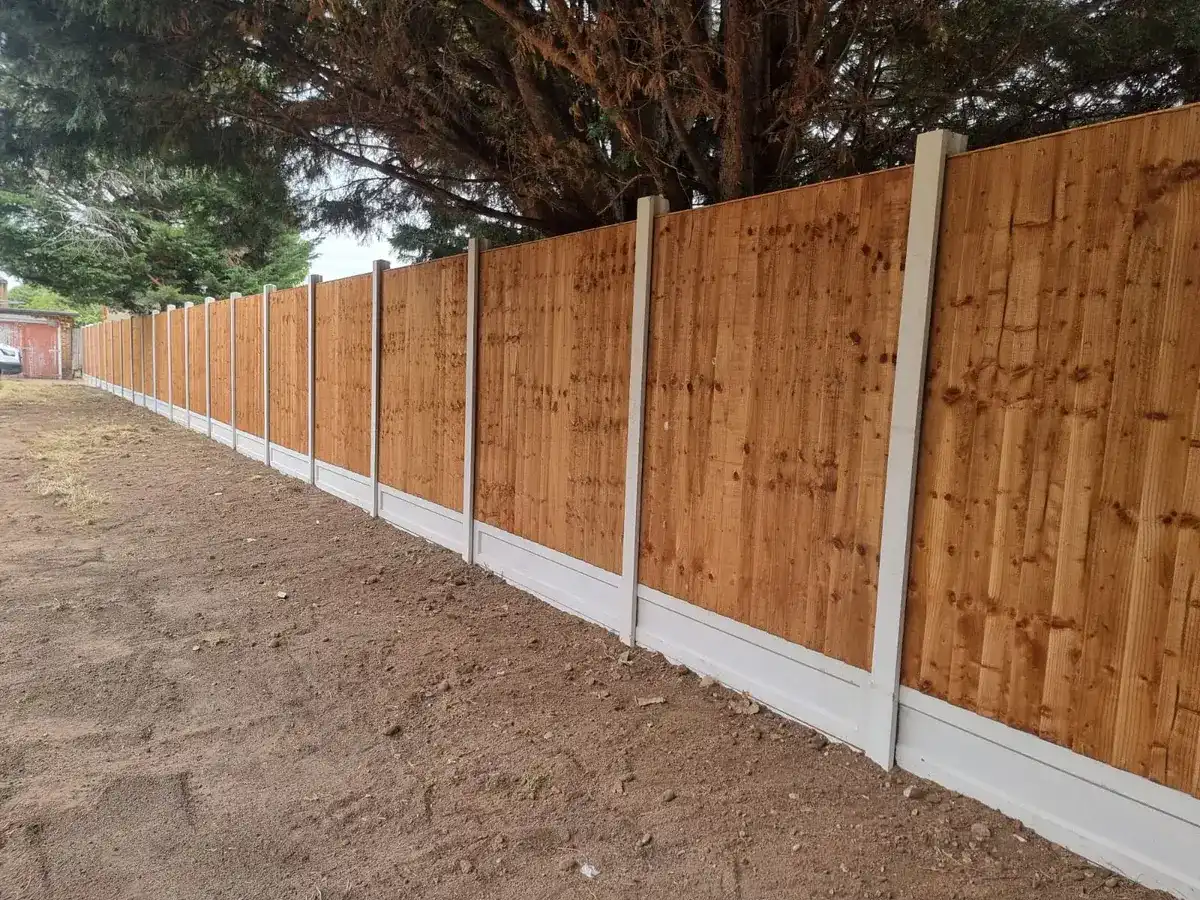
Composite fencing typically runs £120 to £250 per metre installed, with ground, access and board quality driving the spread. Plex Group explains what moves the figure.
Get in touch with us today!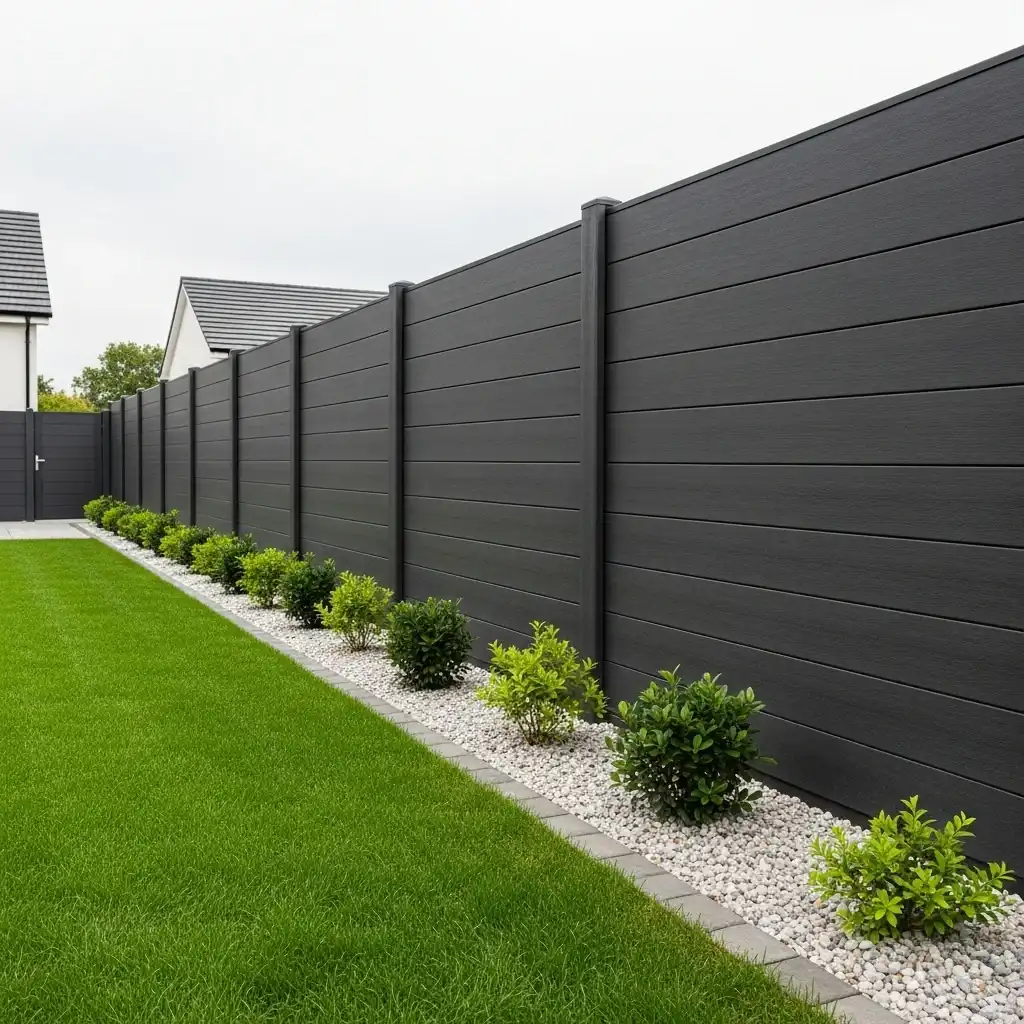
Leave your details and we'll arrange a time that fits your schedule!
Prefer to talk? Call or text us.
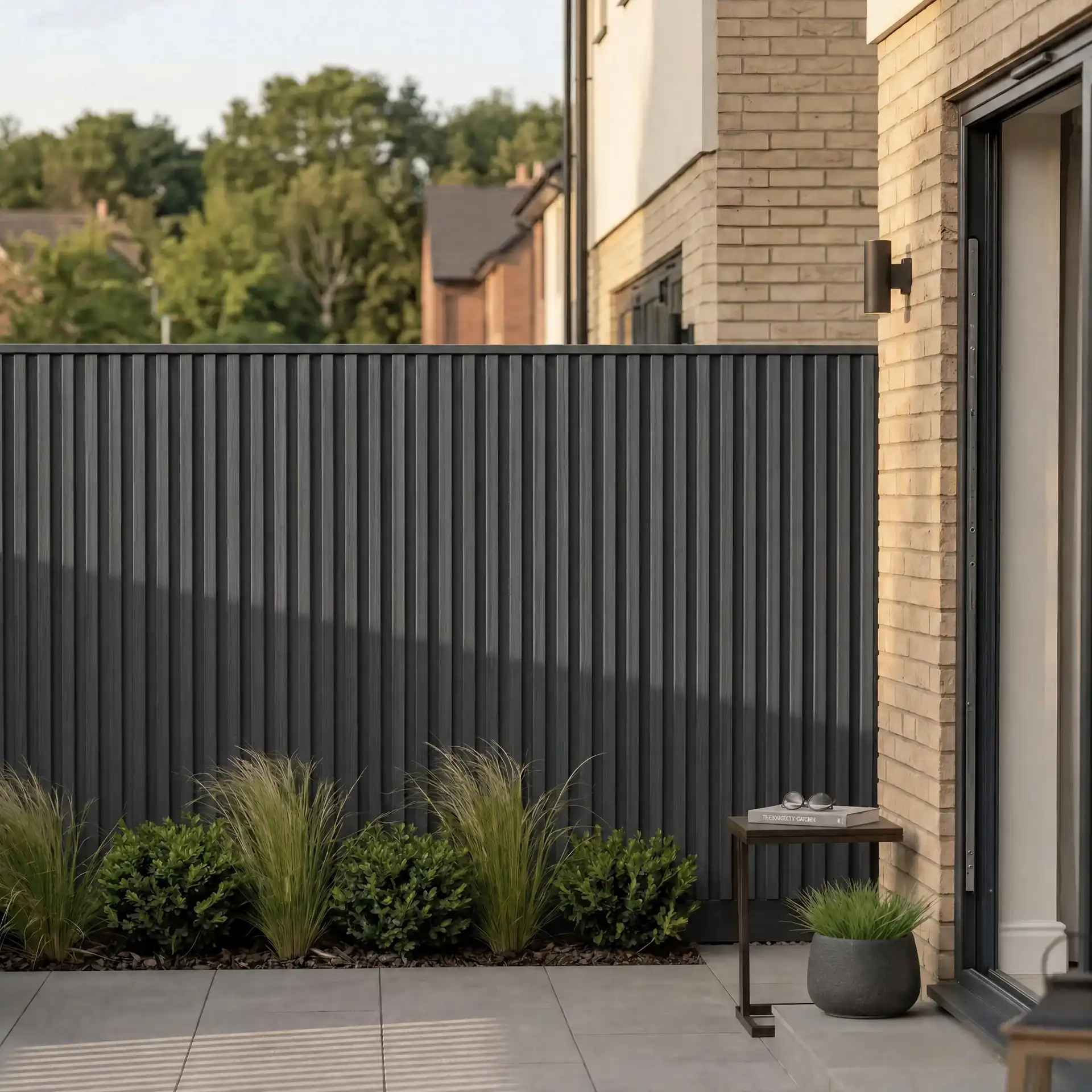
As a guide to the market rather than a quote, composite fencing installed at 1.8m generally falls somewhere between £120 and £250 per linear metre across Worcestershire, Gloucestershire and the Cotswolds. Budget uncapped kits sit at the bottom of that. A capped co-extruded board system with reinforced posts and proper footings sits at the top. Timber closeboard by comparison tends to run in the region of £70 to £110 per metre installed, which is where the rule of thumb that composite costs roughly double comes from. Any contractor quoting a flat rate without seeing the boundary is guessing at the half of the job that actually varies.
Not all composite is the same product. Uncapped boards are wood fibre and polymer with no protective skin, and they are cheap for a reason, since they fade, chalk and take on water at the cut ends. Co-extruded capped boards carry a bonded polymer shell that resists all three, and they cost noticeably more per metre. Filler content matters as well, because a high filler board is heavier, more brittle in cold weather and more prone to swelling. The difference between the cheapest and the best board on the same boundary can be fifty pounds a metre before anyone picks up a spade, and it is the single thing most worth spending on.
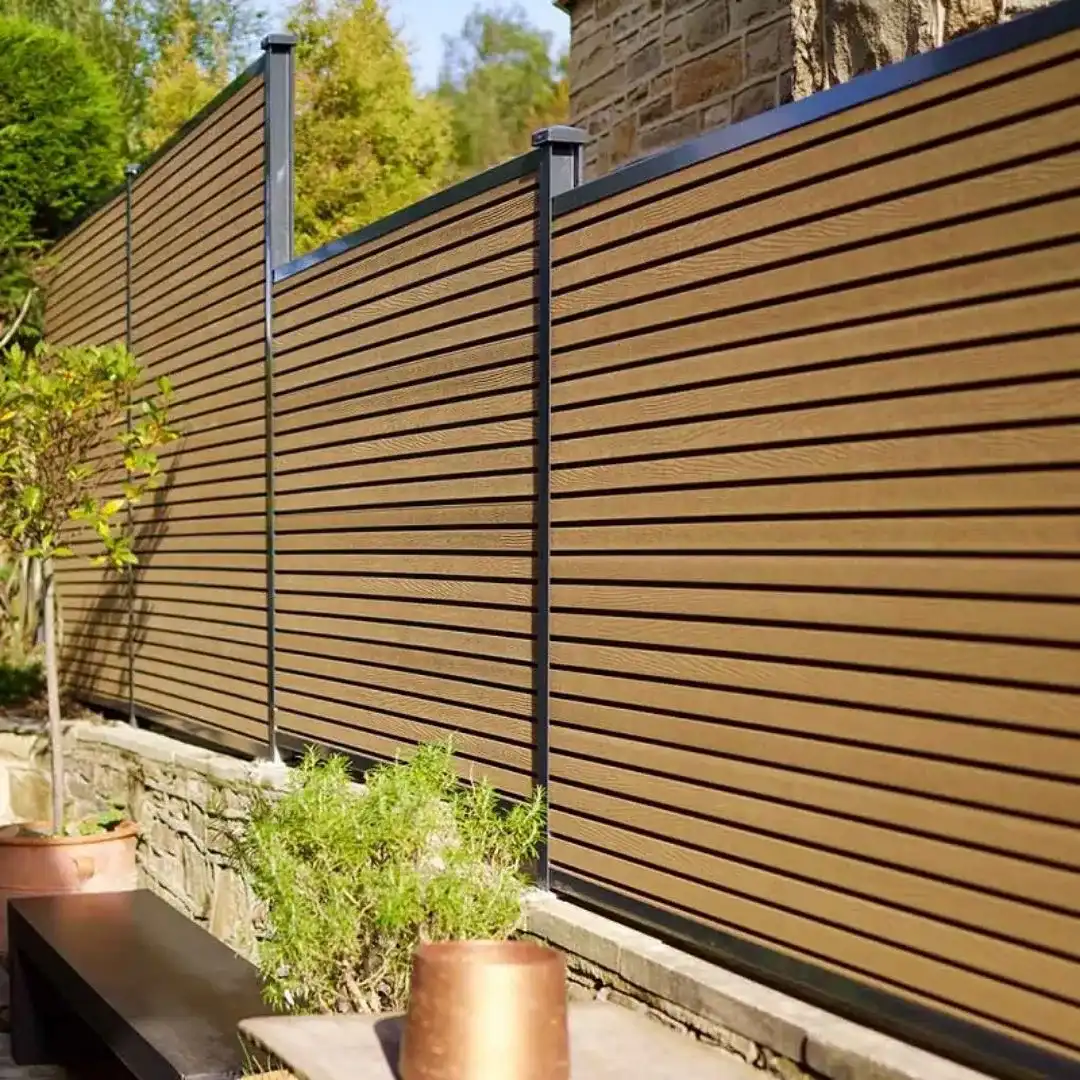
Posts are the other material decision. Composite posts and aluminium reinforced posts cost more than concrete or timber, but they carry the weight of composite boards properly over the fence's life. Height drives board quantity directly, so a 1.8m fence is not marginally dearer than a 1.2m one but substantially so. The biggest single saving available is existing posts. Where sound concrete posts are already in the ground at suitable centres, composite boards slot straight into the channels and the whole cost of removing and resetting posts disappears from the quote, which can take a third off the job.
Labour is usually the larger half of a fencing quote and the site decides it. On the clay around Pershore and Evesham, footings need depth and proper haunching to hold a heavier fence through seasonal ground movement. On the limestone brash of the higher ground near Moreton-in-Marsh and Kingham, post holes frequently hit rock before they reach depth, which means breaking out rather than digging. A boundary that drops across its length has to be stepped or raked, which takes far longer than a level run. Access matters more than people expect, since materials wheeled straight to the line cost less in labour than materials carried through a house. Taking out and disposing of an old fence is a cost in its own right, and a concrete post set in a large footing is slow work to remove.
Two quotes on the same boundary can differ by thousands and both be honest, because they are rarely for the same thing. The questions worth asking are whether the boards are capped or uncapped, what the posts are made of and what centres they are at, how deep the footings go and whether the concrete is haunched above ground, whether expansion gaps are allowed for at the board ends, and whether removal and disposal are included. A quote that names those things is comparable. A quote that says composite fencing supplied and fitted at a rate per metre is not.

We start with a full site assessment rather than a rate over the phone, because the variables above move the figure more than the boards do. We measure the run, check the levels along the line, test the existing posts to see whether any can be reused, establish the ground conditions and depth available for footings, and look at access for getting materials to the boundary. We then quote the specification in writing, naming the board system, the post type, the centres and the footing detail, so you can compare it properly against anyone else. Where a cheaper specification would genuinely do the job we say so, and where a boundary is better served by timber we quote that instead. We do not price composite as a rate per metre applied blind to a site we have not walked. Plex Group installs composite and timber fencing across Worcestershire, Gloucestershire, Oxfordshire, and Warwickshire.
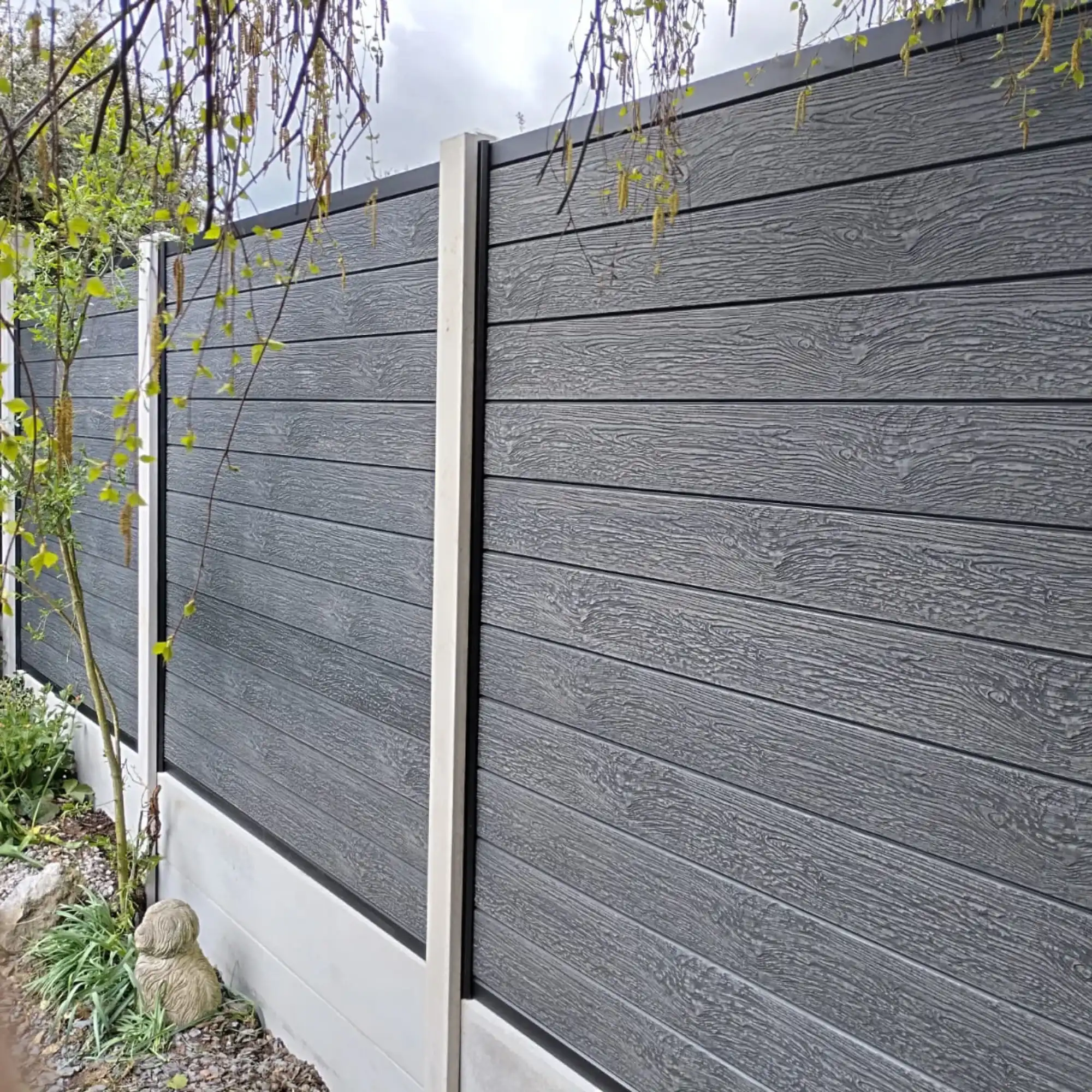
Composite fencing typically runs at roughly double the installed cost of timber, and the honest figure for any boundary depends on the ground, the access and the specification. Plex Group assesses and quotes fencing across Worcestershire, Gloucestershire, and the Cotswolds. Get in touch to arrange a site visit.
★★★★★
From the initial meeting to the final clear up Patrick and Luke were unfailingly polite and professional. Patrick’s quotation for the work was sensible with a detailed breakdown. The work was started on time and was kept to time. The resulting terracing exceeded expectations and the work area was left cleaner than when the team arrived. I cannot thank Patrick, Luke and Jake enough for all their work and would have no hesitation in recommending PLEX Group.

★★★★★
It has been a pleasure having Plex work with me on my garden project. Totally engaged, very communicative and prompt. Access to my property is difficult but they just worked around any problems with a refreshing 'can do' attitude. I would happily recommend Plex to anyone working on a garden project.
★★★★★
Fantastic work and would highly recommend. The team were professional, friendly, considerate, hard working and flexible to ensure the works met our needs and expectations. Really nice team to have on site and were respectful and kept it as tidy as they could. Very impressed with the work and looking to get them to come back to do a couple of other jobs for us in the future.
★★★★★
I am really happy with the work that Plex did. They came up with solutions to problems that arose quickly, efficiently and without any stress. They were friendly, professional, organised, efficient and had excellent communication.
★★★★★
We have recently had a new garage installed from the Plex team and we are thrilled with the finished product. Can't thank Patrick Luke and their team enough. Would highly recommend.
★★★★★
I would highly recommend Luke and Patrick and their team. They are all extremely polite and hard-working. They put up a new pergola in our back garden and tidied up the edges of the garden. An excellent job.
★★★★★
Patrick, Luke and their team have transformed our sloped garden giving us a lovley functional space. They removed a hedge sadly over run with brambles with a fence gaining us a couple more meters of garden too! Despite having a week of rain they did their best to clear up at the end of the job. We would highly recommend this professional team.
★★★★★
Luke and Patrick have completed two projects for us now. They are the most polite and professional people with a hardworking team of individuals. Nothing is too much trouble for them.
★★★★★
Luke and his team are really lovely and professional. Cannot recommend him enough.
★★★★★
Luke and the team are absolutely brilliant. A passion for what they do and personal but professional, so pleased to have found them!
★★★★★
Really pleased with the concrete base for my carport that was completed by the team , worked really hard in poor weather conditions . Great job would definitely recommend the team .
★★★★★
Our garden has never looked better - hard-working, thorough, and also great at getting in touch if there's a change to the schedule, etc. They have nursed our box hedging back to health. Before and and after photos are a bonus!
★★★★★
Competitive price wise even though the work carried out was to a very high standard. I was very pleased with the end result and impressed with the tidiness they left the garden after all the work was carried out. A very happy customer!
★★★★★
Very obliging and efficient we have worked out a schedule that suits us both.