
Quality fencing defines your garden and adds real value to your property. Plex Group explains why fencing in Evesham and across Worcestershire is about more than just boundaries.
See how we can help you!
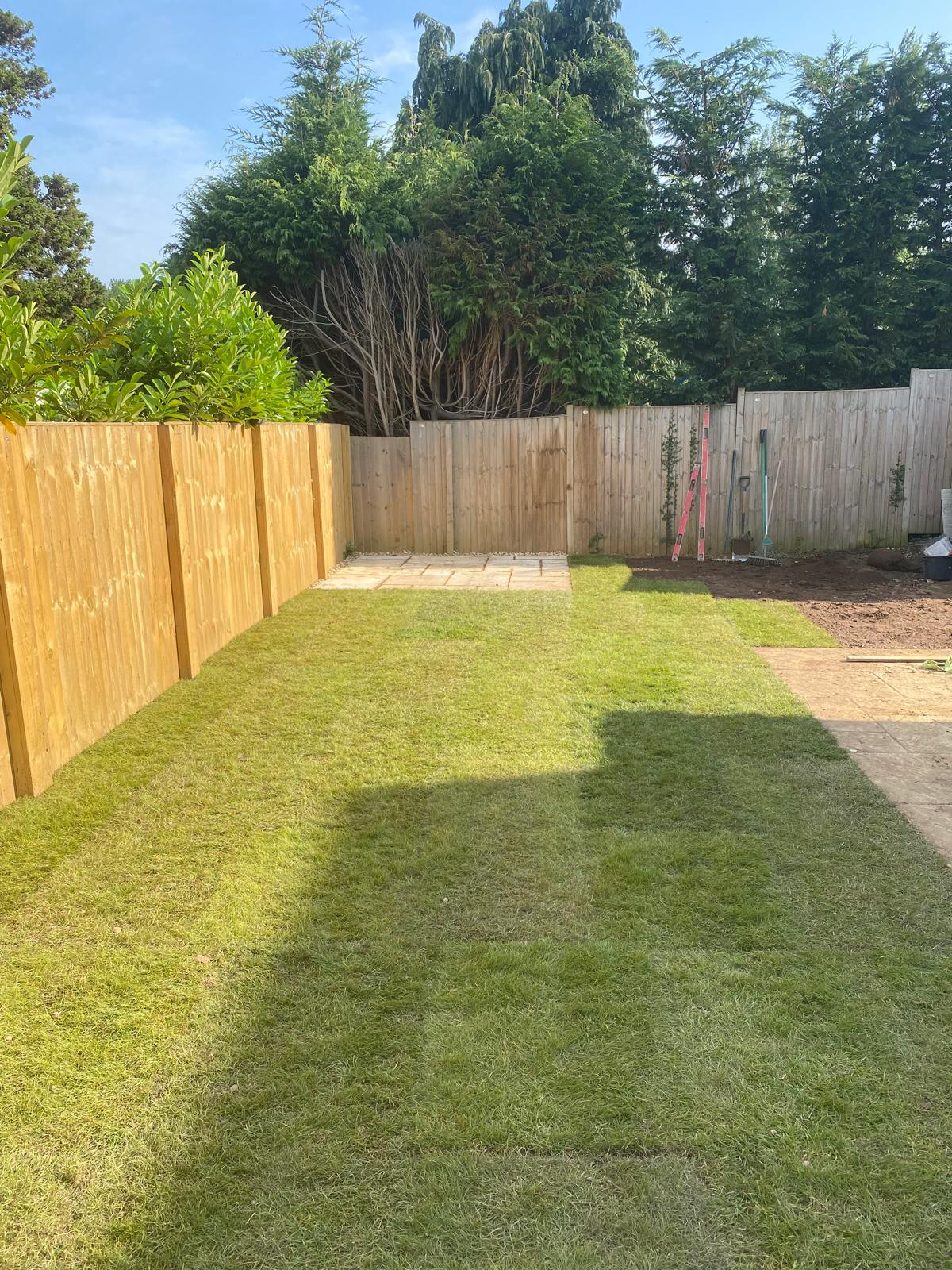
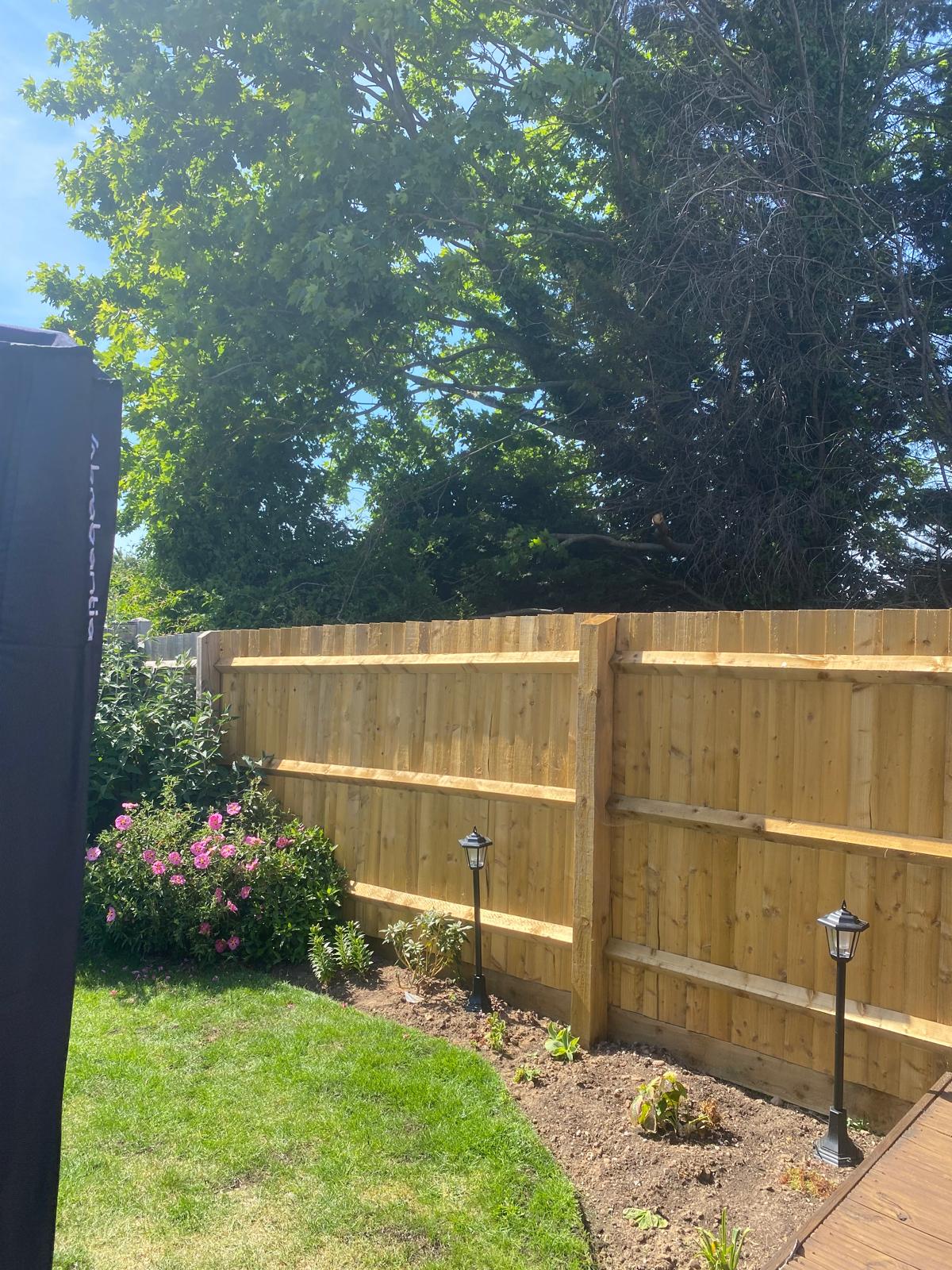
In new build gardens across Evesham, Cheltenham, and Stratford-upon-Avon, fencing is often the first structural element that defines the space. A well-chosen fence creates privacy, reduces wind exposure, and frames the garden — making everything else feel more considered. Properties with well-maintained boundaries consistently sell faster and attract stronger offers.
Timber closeboard fencing remains the most popular choice for privacy and durability, typically lasting 15–20 years with correct treatment. Composite fencing suits modern gardens in Cheltenham and Burford, offering a clean aesthetic with minimal upkeep over 25+ years. For period properties across the Cotswolds, featheredge or decorative panel fencing complements the architecture naturally.
Fencing works best when it's designed as part of the wider landscape — not added as an afterthought. Paired with porcelain paving or natural stone, the right fence completes the garden's character. Plex Group integrates fencing into every project from the planning stage, ensuring height, material, and style are considered alongside patios, planting, and lighting.
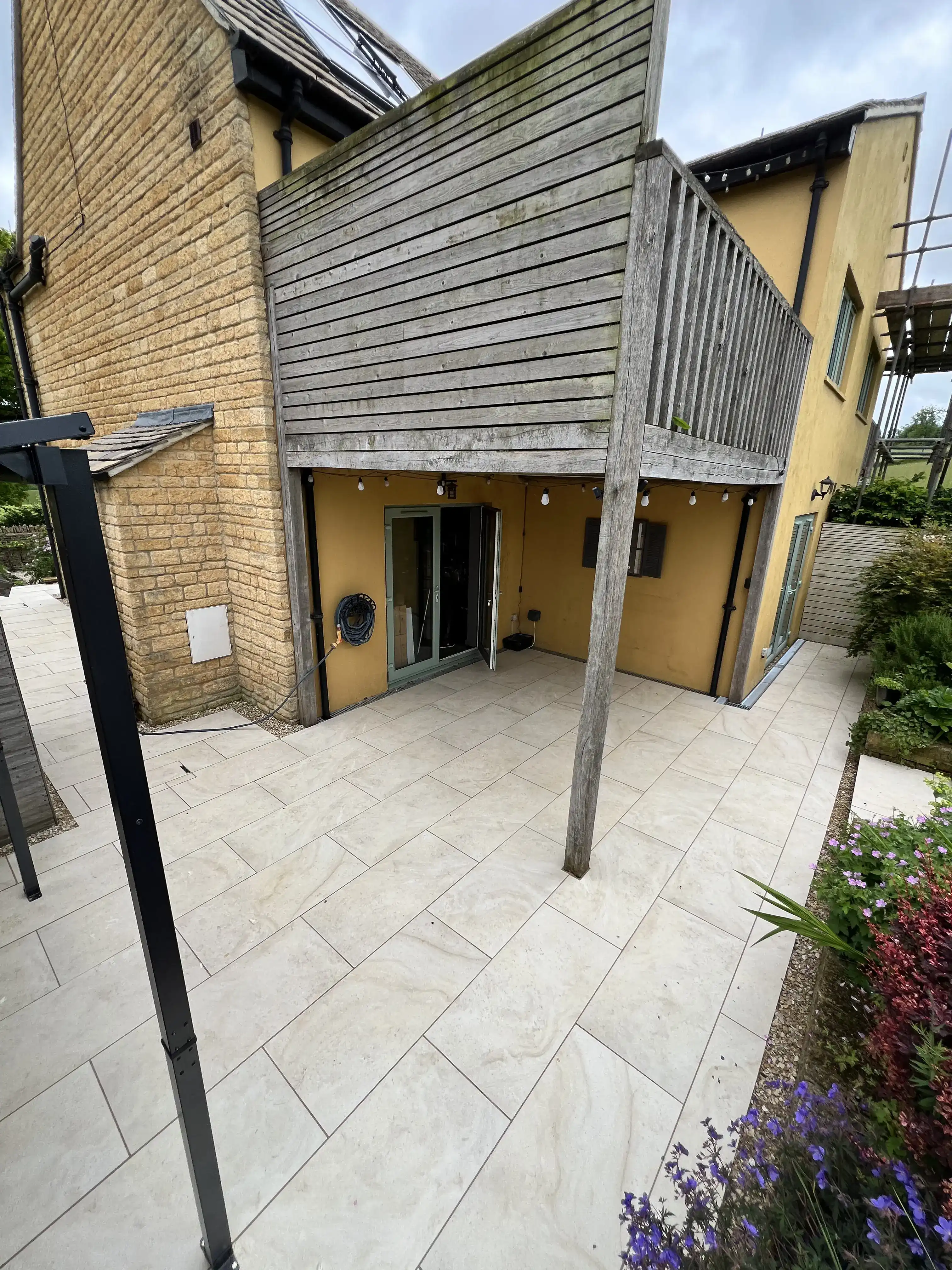
A 10-day full-property hardscape overhaul in Guiting Power, featuring French Dolomite Limestone porcelain throughout, a bespoke pergola over an outdoor kitchenette, and full perimeter drainage.

.webp)
A 6-day boundary extension and fence installation in Kingham, built using tongue and groove cladding to create a seamless, architectural finish.
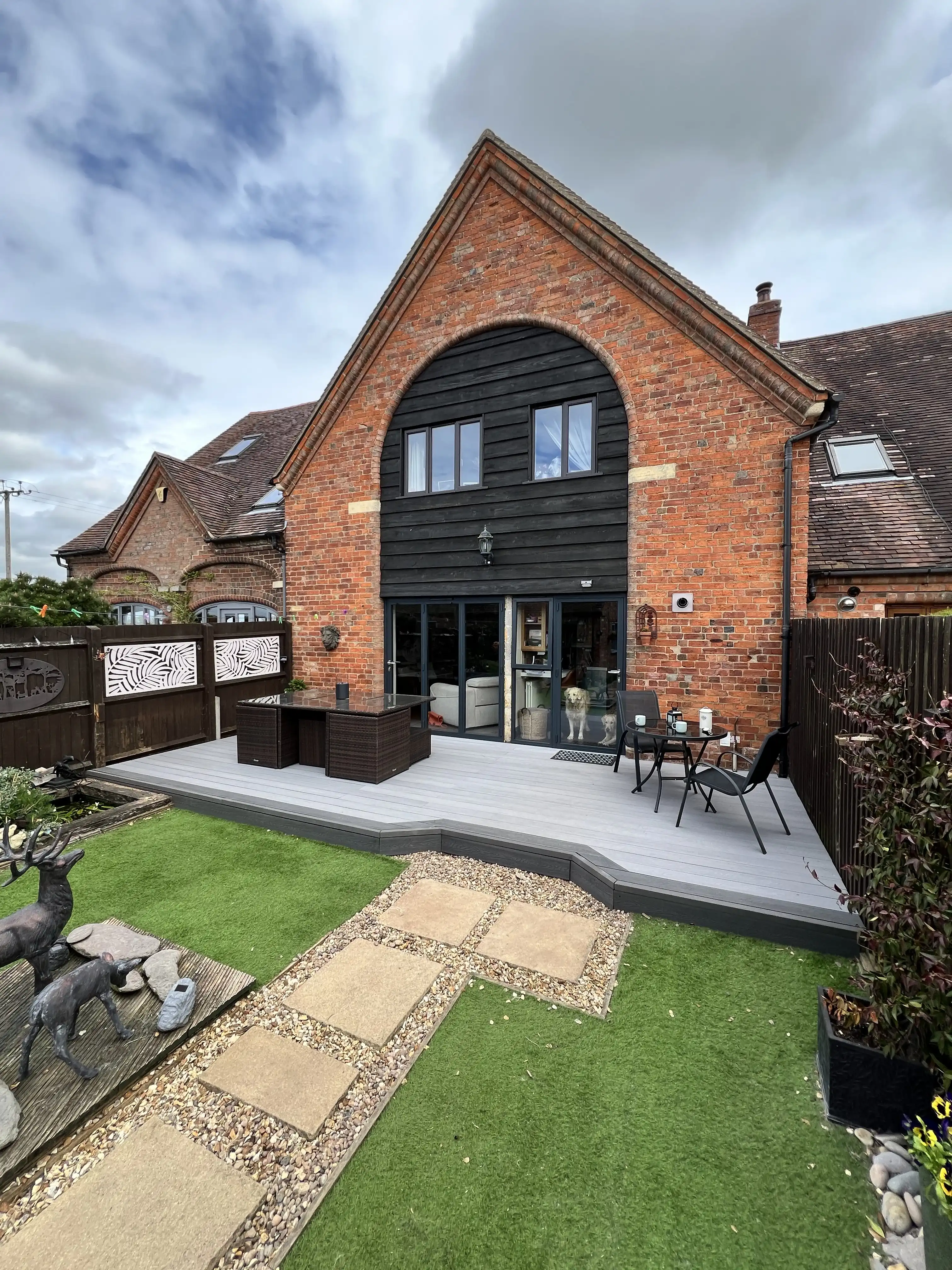
A 20 year old timber deck replaced with frosted blue composite boarding, a custom step, and a built-in fish pond access hatch
.webp)
.webp)
Plex Group installs fencing for residential and commercial clients across Worcestershire, Gloucestershire, Oxfordshire, and Warwickshire. From Evesham new builds to large rural properties in Burford, we supply, install, and finish to a high standard. Contact us for a site visit and quote.
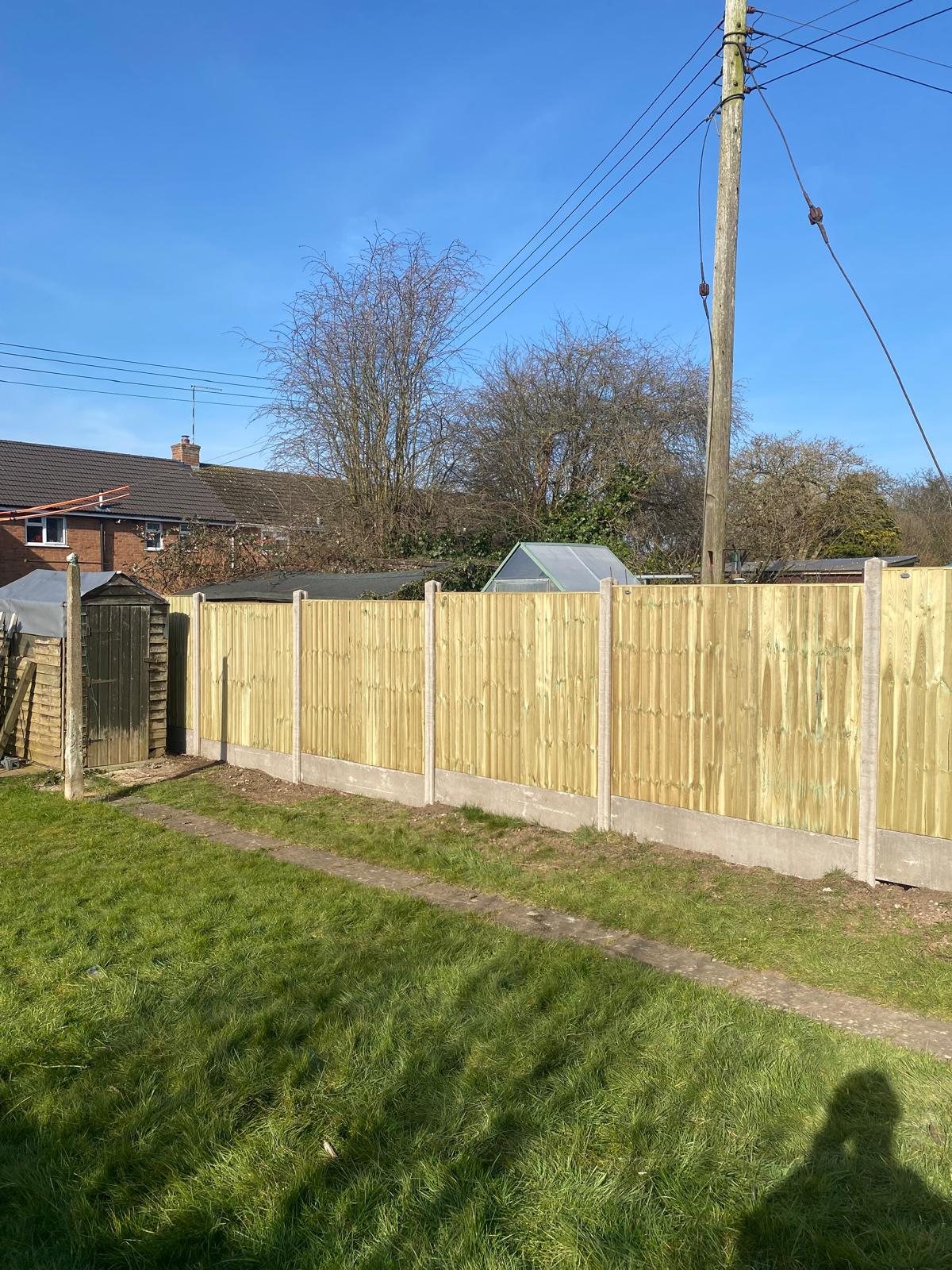
Quality fencing transforms gardens and protects property value. Plex Group provides professional fencing installation across Evesham, Cheltenham, Stratford-upon-Avon, Burford, and wider Worcestershire and Gloucestershire.
.webp)
Ivy roots into the core of a drystone wall and forces the stones apart, and pulling it off makes the damage worse. Plex Group explains what is happening and the right way to fix it across the Cotswolds.
.webp)
A bulging drystone wall means the core has failed and the faces are separating. Plex Group explains why it happens and how a proper rebuild works across the Cotswolds and Gloucestershire.

Potholes in a gravel driveway mean the gravel is sitting on soil with no proper sub-base or membrane beneath it. Plex Group explains the causes and the permanent fix across Worcestershire and the Cotswolds.
.webp)
From the initial meeting to the final clear up Patrick and Luke were unfailingly polite and professional. Patrick’s quotation for the work was sensible with a detailed breakdown. The work was started on time and was kept to time. The resulting terracing exceeded expectations and the work area was left cleaner than when the team arrived. I cannot thank Patrick, Luke and Jake enough for all their work and would have no hesitation in recommending PLEX Group.

It has been a pleasure having Plex work with me on my garden project. Totally engaged, very communicative and prompt. Access to my property is difficult but they just worked around any problems with a refreshing 'can do' attitude. I would happily recommend Plex to anyone working on a garden project.
Fantastic work and would highly recommend. The team were professional, friendly, considerate, hard working and flexible to ensure the works met our needs and expectations. Really nice team to have on site and were respectful and kept it as tidy as they could. Very impressed with the work and looking to get them to come back to do a couple of other jobs for us in the future.
I am really happy with the work that Plex did. They came up with solutions to problems that arose quickly, efficiently and without any stress. They were friendly, professional, organised, efficient and had excellent communication.
We have recently had a new garage installed from the Plex team and we are thrilled with the finished product. Can't thank Patrick Luke and their team enough. Would highly recommend.
I would highly recommend Luke and Patrick and their team. They are all extremely polite and hard-working. They put up a new pergola in our back garden and tidied up the edges of the garden. An excellent job.
Patrick, Luke and their team have transformed our sloped garden giving us a lovley functional space. They removed a hedge sadly over run with brambles with a fence gaining us a couple more meters of garden too! Despite having a week of rain they did their best to clear up at the end of the job. We would highly recommend this professional team.
Luke and Patrick have completed two projects for us now. They are the most polite and professional people with a hardworking team of individuals. Nothing is too much trouble for them.
Luke and his team are really lovely and professional. Cannot recommend him enough.
Luke and the team are absolutely brilliant. A passion for what they do and personal but professional, so pleased to have found them!
Really pleased with the concrete base for my carport that was completed by the team , worked really hard in poor weather conditions . Great job would definitely recommend the team .
Our garden has never looked better - hard-working, thorough, and also great at getting in touch if there's a change to the schedule, etc. They have nursed our box hedging back to health. Before and and after photos are a bonus!
Competitive price wise even though the work carried out was to a very high standard. I was very pleased with the end result and impressed with the tidiness they left the garden after all the work was carried out. A very happy customer!
Very obliging and efficient we have worked out a schedule that suits us both.

.webp)


